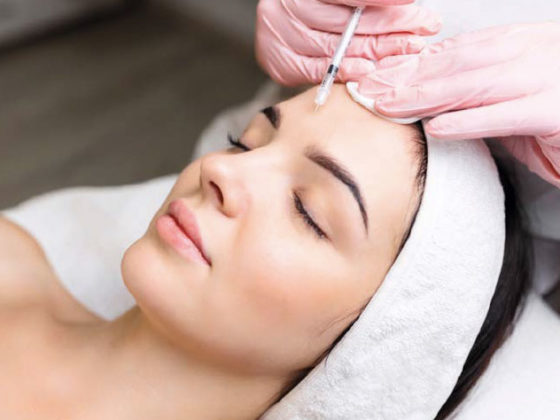
From scar to skin quality: the Hestia CO₂ laser illustrates the continuity between medical dermatology and aesthetic dermatology, with clinical rigour.
In dermatology, the boundary between medical and aesthetic is often artificial. The Hestia CO₂ laser fits within this continuity: treating a lesion, improving a scar, restoring skin texture. Its effectiveness relies on the indication, patient selection and rigorous management of aftercare.
Medical and aesthetic dermatology: comprehensive care
Medical dermatology is at the heart of my practice and my primary vocation. It is therefore natural that my work has extended into aesthetic dermatology, not as a change of direction, but as a continuation. In many situations, the patient does not come solely with a lesion: they come with discomfort, an alteration in body image, sometimes a psychological impact. Dermatological management does not always end with biological healing. The most common example is severe acne: isotretinoin allows control of the disease, but scars may persist over time. The dermatologist must then offer appropriate solutions within a medical framework. Likewise, certain post-surgical scars (for example after the placement of an implantable device in an oncological pathway) may benefit from management aimed at improving skin quality, without ever losing sight of safety and ethics. In this context, the Hestia CO₂ laser perfectly illustrates this dual aspect of the speciality: a tool capable of addressing varied dermatological indications while opening the way to dermabrasion and skin rejuvenation treatments.
Principles: an ablative laser used for remodelling
The CO₂ laser emits infrared light at 10,600 nm, which is easily absorbed by the water contained in the skin. This absorption generates intense heating allowing controlled ablation and/or a thermal effect depending on the parameters. In fractional mode, the energy is delivered in the form of micro-impact zones separated by healthy skin, promoting rapid healing and progressive remodelling. Stimulation of neocollagenesis and dermal reorganisation explain the improvement in texture, irregularities and certain scars. The CO₂ laser may also be used in a more targeted manner on lesions, with great precision. This versatility justifies its place in the dermatological arsenal, provided that strict rules of selection and information are respected.
My main indications
In my practice, the indications for the Hestia CO₂ laser are organised around three axes.
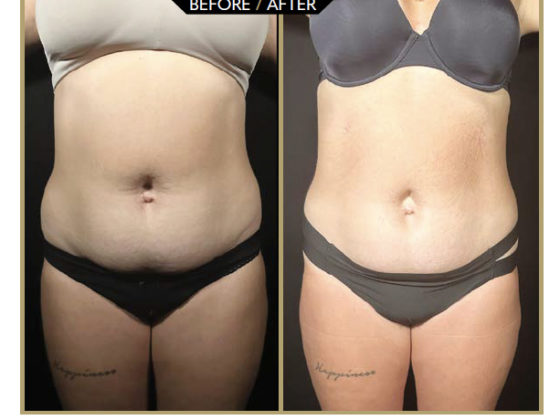
- Scars: acne scars, surgical scars, self-harm scars, stretch marks. The objective is improvement of texture, attenuation of irregularities and skin remodelling.
- Facial reliefs and irregularities: certain benign lesions or unaesthetic reliefs may be improved by targeted treatment according to the clinical context (for example syringomas, fibrous papules, sebaceous hyperplasia).
- Aesthetic indications: improvement of fine lines, skin quality, irregular texture, and management of enlarged pores, particularly in fair to intermediate phototypes when the indication is correctly established.
Patient selection: the key factor for success
The success of CO₂ laser treatment depends as much on the technique as on the therapeutic alliance: understanding, trust and adherence to aftercare. The patient must be motivated, able to understand post-procedure constraints and have realistic expectations. Particular attention is paid to a history of pigmentary disorders, healing disorders, phototype, as well as the absence of active infection. In cases of recurrent infections (particularly herpetic), prophylaxis must be discussed.
Information and aftercare: a medical time in its own right
The information stage is central. Patients are seen in consultation before the procedure, with personalised oral information: expected benefits, limitations, risks, and above all the nature of the aftercare (redness, crusting, recovery time). Written information is provided, including a prescription for a topical anaesthetic and post-laser care: gentle cleansing, twice-daily application of an emollient/healing cream, avoidance of irritating or perfumed products, and strict photoprotection for several weeks. A reflection period is offered, and a means of contact is provided in case of questions.
In conclusion
The Hestia CO₂ laser is a versatile tool that finds its place at the crossroads of medical and aesthetic dermatology. Its effectiveness relies on a well-established indication, rigorous selection and clear information about aftercare. Used within this framework, it sustainably improves skin quality. L
What I tell my patients before a CO2 treatment
• “The treatment is effective, but the aftercare is real.” Redness, crusting and temporary social downtime must be expected.
• “You must be motivated and available.” The quality of post-procedure care determines the result.
• “We aim for improvement, not perfection.” Progress is often gradual.
I do not propose CO₂ treatment if the patient is not ready to accept the aftercare, is seeking an immediate result, or if the therapeutic relationship is not sufficiently serene (major anxiety, persistent doubt).
Dr Charlotte Décamps

Dermatologist in Amiens.Practice focusing on medical dermatology and aesthetic dermatology.A global approach to the patient, combining clinical rigour, technical precision and personalised support.
Infos: docteurdecamps.fr