Dr Harold Eburdery
ANTI-AGE & LONGEVITY MAGAZINE: Why has GLP-1 changed medical aesthetic approaches so profoundly?
Dr Harold Eburdery: We are now encountering patients who have lost a lot of weight in very little time, and often at an age when skin elasticity is not as good as it was in their youth. The patients who come to see me are mainly women aged between 40 and 50, and at this age 10 to 20kg weight loss really alters their face on two levels: a loss of volume and a loss of skin quality and tautness, as though the facial skin is no longer fixed to the deep structures, which leads to real sagging. In reality, they complain much more about the sagging than the loss of volume.

AALM: What can we do to address this?
DR. H.E.: In terms of aesthetic medicine, we need to address both of these issues: fillers to compensate for lost volume, and skin quality treatments, particularly collagen inducers, to recover its elasticity and support. These are actually the first treatments I would recommend, because if we only address the problem with fillers, we add volume without treating the sagging. The added volume will not sit in the right place, and if we add too much, we might even make the sagging worse. But if we address the sagging first, we can see an immediate improvement in how the patient feels, and this structural improvement allows us to then fill the facial volumes efficiently and in exactly the right place.
AALM: Which areas of the face lose the most?
Dr. H.E.: Undeniably the middle third of the face. This loss of volume causes the whole subjacent layer to sag and accentuates the nasolabial folds, expression lines and jowls, and causes the jawline and neck to sag. The loss of malar volume also highlights any dark shadows under the eyes and down the tear trough. It is just like “standard” aging, just accelerated! In terms of inducers, I mainly use poly-L-lactic acid and calcium hydroxyapatite (CaHA). I prefer the former because I have more experience with it and more hindsight. PLLA is a product that has been used for many years to treat a loss of laxity and volume in the middle third of the face. In recent years, the injection method has evolved from deep and concentrated boluses to superficial nappage with a higher dilution, which has significantly improved its tolerance. It is now a safe and effective treatment and is very straightforward to perform.
AALM: After completely stopping GLP-1, patients can gain weight. How do you manage this “yoyo effect”?

Dr. H.E.: It is logical that some of the patients will subsequently gain weight, so we have to take this into account when choosing which treatment to perform. This is another argument for favouring a treatment that focuses on skin quality and adherence rather than volume. As an example, I would be unlikely to suggest facial lipofilling because I do not want to risk adding fat to the face when there is a risk of the patient putting the weight back on. My first choice would be a structural collagen inducer on the face, possibly combined with a reversible volumising treatment containing hyaluronic acid.
AALM: Are you faced with a huge influx of patients who are taking GLP-1?
Dr. H.E.: Not huge as yet, but we can see that something is happening. For the last year or so, I have received more regular and recurrent demands. The patient profile and requests are not quite the same as patients who have undergone bariatric surgery, bypasses or sleeves, who often want to repair their body rather than their face. These new patients are generally in their forties, have never been obese but have been overweight and have finally found the key to losing 15kg. They are delighted to have lost the weight; they feel better about themselves but quickly notice the repercussions the weight loss has had on their face. These patients tend to be well informed; they know a lot about aesthetic medicine procedures and have often already had some done. They sometimes come to see me right at the beginning of their GLP1 treatment to have preventative tissue inducing treatments on their face.
Dr Harold Eburdery
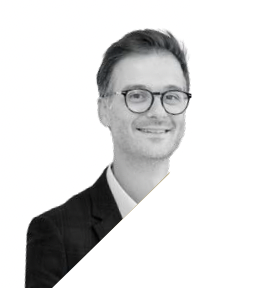
Dr. Harold Eburdery practises plastic and cosmetic surgery as well as aesthetic medicine in Lyon. Trained in plastic surgery and anatomy in France and Switzerland, he holds diplomas in plastic, reconstructive, and cosmetic surgery, microsurgery, and aesthetic injection techniques. He actively participates in medical education through oral presentations at international congresses (IMCAS, AMWC, SOFCEP).
Infos: docteureburdery.com