Dr Claude Chauchard
How to stabilise Your Weight After GLP-1 Treatment and Rebalance Your Metabolism
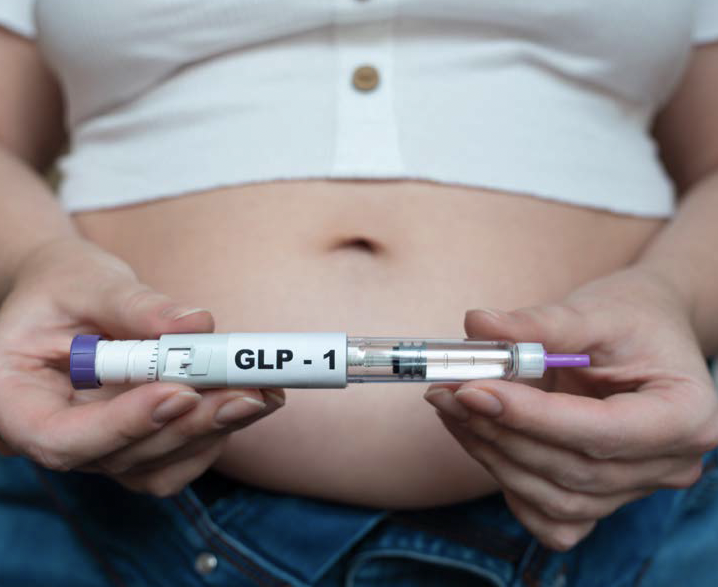
GLP-1 therapies have profoundly transformed the management of excess weight and obesity. They often allow rapid weight loss, reduced appetite, and improved metabolic control. But the real question is not only “How do we lose weight?”. The real question is “How do we stabilize this weight loss long term without regaining weight?”. Because the major mistake is believing that weight loss is the end of the treatment. In reality, it is only the beginning of a much more important phase: metabolic stabilisation.

The Real Danger: Weight Regain
When someone loses weight, the body keeps the memory of its former weight for a long time. The brain, hormones, adipose tissue, and metabolism continue to function according to the old biological setting. This is what we call the ponderostat, or the body’s weight thermostat. The body naturally tries to return to its previous balance. This is why there is an essential clinical rule: The body often needs as many months of stabilisation as kilograms lost. In other words: 10 kg lost = about 10 months of stabilisation,
The Fundamental Rule: Weigh Yourself Every Day
Stabilisation begins with a simple discipline: weigh yourself every morning, at the same time, under the same conditions. Why? Because weight regain always starts silently. When a patient regains 3, 4, or 5 kilograms, it becomes much harder to reverse the trend. However as soon as the first kilogram returns, action must be taken immediately. What Should Be Done After Regaining One Kilogram?
Several strategies can be used rapidly.
- Short Intermittent Fasting. For 24 to 72 hours depending on the individual: caloric reduction, shorter eating window, elimination of fast sugars, increased hydration. This often helps rapidly correct the metabolic drift.
- Temporary Reintroduction of GLP-1. In some patients, a short-term return to treatment may be useful low doses, for one or two weeks, to quickly restore metabolic control.
GLP-1 should not only be viewed as a weight-loss drug. It can also become a metabolic rebalancing tool.
The Major Mistake: Losing Muscle Instead of Fat
Many patients lose weight… but mainly lose muscle mass. This is a major physiological mistake. Muscle represents strength, metabolism, insulin sensitivity, weight stability, functional longevity. When muscle loss becomes excessive metabolism slows down, fatigue increases and the risk of regaining weight rises dramatically.
Protein Intake Is Essential
During GLP-1 treatment, appetite decreases significantly. The danger is therefore eating too little and especially not enough protein. Muscle mass must absolutely be protected. Protein requirements should remain high: Men: approximately 1.2 g of protein/kg/day, Women: at least 1 g/kg/day. Proteins become: a muscle-protection strategy, a metabolic stabilisation tool and a prevention strategy against rebound weight gain.
Hydration: A Frequently Neglected Point
During weight loss, hydration needs increase. Insufficient hydration promotes fatigue, metabolic slowing, constipation, poor recovery and decreased tissue quality.
Fat Should Not Be Completely Eliminated
Another common mistake is trying to eliminate all fats. Certain fats are essential for: cellular membranes, hormones, skin quality, brain function, tissue integrity. Excessively aggressive weight loss may lead to skin sagging, fatigue, visible aging, loss of tissue tone. Good fats must therefore remain part of the diet: omega-3 fatty acids, quality oils, fatty fish, balanced lipid intake.
The Digestive Membrane: The Foundation of Metabolism
In our preventive and longevity medicine approach, we focus heavily on what we call: the digestive membrane. Because an imbalanced intestine disrupts: inflammation, metabolism, satiety, insulin regulation… During and after GLP-1 therapy, it is essential to: restore digestive quality, reduce fermentation, improve the microbiome, correct food intolerances, support the intestinal mucosa.
The Vascular and Cellular Membranes
Weight stabilisation is not only about calories. It also depends on: circulation quality, tissue oxygenation, inflammation, cellular function. This is why we also work on the vascular membrane and the cellular membrane. When these biological foundations function correctly: energy improves, muscles respond better, recovery accelerates, aging slows and weight becomes more stable.
Preserving Muscle and Bone Structure
Weight loss should never weaken the body. The objective is not only to become thinner. The objective is to become stronger, more toned with improved biological quality. This is why it is essential to combine proteins, muscle activity, hydration, membrane support, and personalised nutritional strategies.
The Benefits of Omega-3 and NAC
In our clinical practice, we frequently associate omega-3 fatty acids rich in EPA/DHA and NAC (N-acetyl-cysteine).
GLP-1 should not be viewed solely as a weight-loss treatment. Used intelligently, it can become a metabolic rebalancing tool, a nutritional restructuring strategy and a way to durably transform biological terrain.
Dr Claude Chauchard

A renowned specialist in nutrition, weight control and medicine for aging prevention. More than a million copies of 14 books sold in more than 5 languages. Founder of the Anti-Aging clinic concept. La Clinique De Paris, established in China, Taiwan, Japan and Korea since 1992. Assistant professor at the universities of SEOUL and PEKING. Creator of the online Chrono Géno Nutrition method.
Infos: lcdpi.net