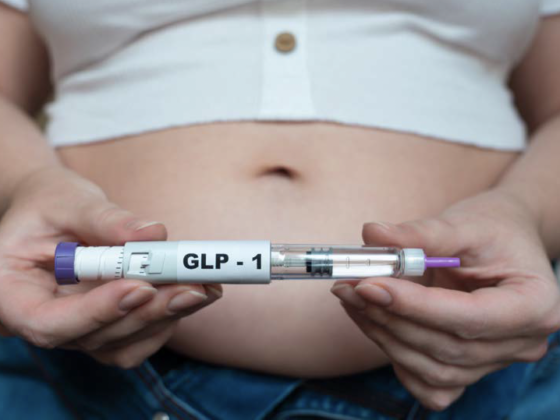
Do GLP-1 receptor agonists, a highly effective therapy for treating metabolic disorders, have an impact on aging?
People often ask me if there is enough long-term data about GLP-1 receptor agonists (GLP-1AR).
The first GLP-1AR, Exenatide, was developed in the early 1990s. In 2005, the first GLP-1 receptor agonist was approved for the treatment of type 2 diabetes (1). Since then, these molecules have become more powerful, longer lasting and easier to administer. They are well known and well tolerated, providing they are used correctly. Originally developed to improve glycaemic balance, these molecules quickly showed that they have a major effect on weight loss, satiety, cardiovascular risk and several metabolic complications. The widening scope of their benefits explains the increasing attention paid to them in the field of longevity and aging well.

Do these molecules affect cognitive function?
They have also been found to have a beneficial action in fields other than the metabolism, such as cognition and age-related neurodegenerative diseases like Alzheimer’s. Certain epidemiological studies suggest that GLP-1 AR could have a protective effect by delaying the development of dementia in diabetic patients treated using these molecules (2, 3). Alzheimer’s disease is a multifactorial physiopathology, which means there are many therapeutic targets. One of the many research pathways is GLP-1AR. A recent article in Nature aging reported that activating the GLP-1 receptors in a mouse’s brain could improve the brain’s use of glucose and promote the survival of the nerve cells, which shows promise for protecting the brain from aging (4).
GLP-1 receptor agonists and the microbiota: what is their impact on aging?
Recent research showed the intestinal microbiota to be a key modulator for aging, influencing immune system regulation, metabolic homeostasis and the communication pathways between the hormones and nervous system (neuroendocrine pathways) (5). A diverse and balanced microbiota supports the immune function, promotes the absorption of nutrients and digestion, and preserves the integrity of the intestinal barrier, which promotes a state of optimal health in elderly people6. GLP-1 analogues could also exert some of their metabolic effects via the intestinal microbiota. Nevertheless, their direct effects on the microbiota have not yet been fully understood in humans.
Something to watch out for and current research into skin aging during GLP-1AR weight loss.

The changes to the body composition and skin quality caused by GLP-1AR can lead to functional and aesthetic issues. New molecules are being studied in order to allow us to improve the visible signs of skin aging when taking GLP-1 receptor agonists. Acetyl Dipeptid 31 Amide (AP31), a new multifunctional micro peptide with anti-inflammatory properties (that increases procollagen, elastin, decorin, fibronectin and hyaluronic acid in vivo) is currently being studied. Though the results are promising in terms of normal aging, randomised controlled trials are still needed (7, 8)
Pr Nadia Sabbah

Endocrinologist at Orléans University Hospital. University professor and hospital practitioner in endocrinology, diabetology and metabolic disorders with expertise in endocrine oncology at Orléans university and university hospital, and over 20 years’ clinical and academic experience. She is the author of numerous international publications and has a political science degree in Health Management and Policy.
Infos: linkedin.com/in/nadia-sabbah-pu-ph-4542a229/
References
D. J.; Habener, J. F.; Holst, J. J. Discovery, Characterization, and Clinical Development of the Gluca-gon-like Peptides. J. Clin. Invest. 2017, 127 (12), 4217–4227. https://doi.org/10.1172/JCI97233.2. Monney, M.; Jornayvaz, F. R.; Gariani, K. GLP-1 Receptor Agonists Effect on Cognitive Function in Patients with and without Type 2 Diabetes. Diabetes Metab. 2023, 49 (5), 101470. https://doi.org/10.1016/j.diabet.2023.101470.3. Tang, H.; Donahoo, W. T.; DeKosky, S. T.; Lee, Y. A.; Kotecha, P.; Svensson, M.; Bian, J.; Guo, J. GLP-1RA and SGLT2i Medications for Type 2 Diabetes and Alzheimer Disease and Related Dementias. JAMA Neurol. 2025, 82 (5), 439–449. https://doi.org/10.1001/jamaneu-rol.2025.0353.4. Sabbagh, M. N.; Cummings, J. L.; Ballard, C.; van der Flier, W. M.; Heneka, M. T.; Holst, J. J.; Knudsen, L. B.; Salloway, S.; Tansey, M. G.; Drucker, D. J. Repurposing Glucagon-like Peptide-1 Receptor Agonists for the Treat-ment of Neurodegenerative Disorders. Nat. Aging 2026, 6 (1), 56–67. https://doi.org/10.1038/s43587-025-01029-3.5. Garzon-Escamilla, N.; Medina-Cardena, M.; Roy, P.; Trent, J.; Jamous, J.; Somesan, Y.; Denslow, S. J. Mecha-nistic Links Between the Gut Microbiome and Longevity Therapeutics. Biomedicines 2026, 14 (2), 316. https://doi.org/10.3390/biomedicines14020316.6. Liu, J.; Tan, Y.; Cheng, H.; Zhang, D.; Feng, W.; Peng, C. Functions of Gut Microbiota Metabolites, Current Status and Future Perspectives. Aging Dis. 2022, 13 (4), 1106–1126. https://doi.org/10.14336/AD.2022.0104.7. Lisante, T. A.; Green, B.; Hubert, K.; Parsa, R.; Patel Shah, A.; Shuja, Z.; Sylianteg, G. A Novel Cosmetic Anti-In am-matory Peptide With Firming and Lifting Bene ts: The Potential for Adjunctive Care for Skin Laxity Associated With Weight Loss. Dermatol. Surg. Off. Publ. Am. Soc. Dermatol. Surg. Al 2026, 52 (6S), S16–S22. https://doi.org/10.1097/DSS.0000000000005181.8. Edison, B. L.; Parsa, R.; Dufort, M.; Tierney, N. K.; Green, B. A.; Farris, P. K. Acetyl Dipeptide-31 Amide: A Novel Cosmetic Anti-In ammatory Peptide That Demonstrates Anti-Aging, Firming, and Lifting Bene ts. J. Drugs Der-matol. JDD 2025, 24 (1), 23–33. https://doi.org/10.36849/JDD.8786.