Dr Fatma Pelin Ozgen
Polynucleotides and broadband light redefine rosacea management by targeting inflammation, vascular reactivity, and skin quality.
Long considered a purely inflammatory condition, rosacea is now recognised as a complex skin disorder involving vascular dysregulation, impaired skin barrier function and chronic inflammation. Regenerative approaches introduce a new therapeutic pathway focused on long-term skin balance.
Understanding Rosacea Beyond Redness
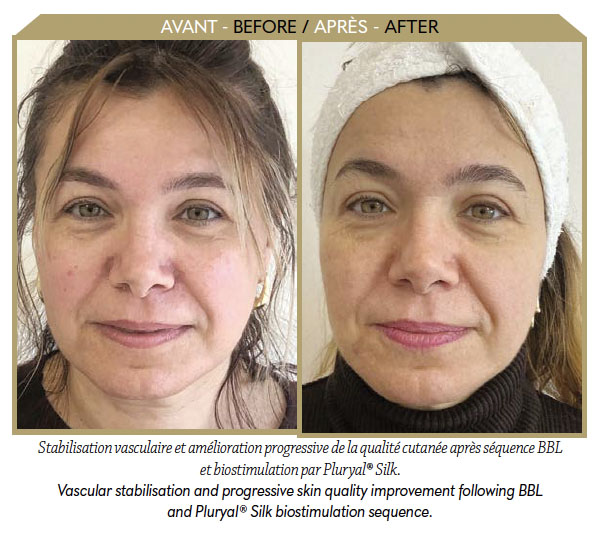
Rosacea presents as a multifactorial condition combining vascular instability, chronic inflammation and barrier dysfunction, often associated with microbiome imbalance. It primarily affects women between 30 and 50 years old. Clinically, persistent erythema, flushing, telangiectasia and skin sensitivity significantly alter skin quality and patient confidence. While conventional treatments help control flare-ups, they have limited impact on the underlying inflammatory environment and long-term dermal integrity.
Pluryal® Silk: Biostimulation and Inflammatory Modulation
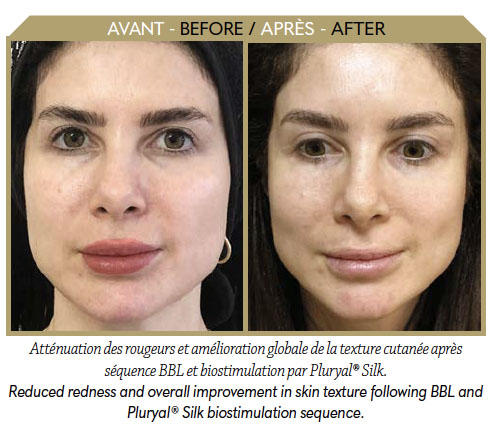
The shift toward regenerative strategies represents a major turning point. Polynucleotides (PN), derived from highly purified salmon DNA, exert targeted anti-inflammatory effects through adenosine A2A receptor activation, reducing the release of pro-inflammatory cytokines such as IL-1, IL-6, and TNF-α. Beyond their soothing action, they stimulate fibroblast activity, promote collagen synthesis, and support progressive extracellular matrix remodelling. Their effects on barrier function and angiogenesis regulation contribute to improving overall skin quality — a key factor in rosacea management.
Pluryal® Silk + BBL Protocol: A Sequential Synergy
In my practice, rosacea management relies on a combined strategy targeting both the vascular component and the inflammatory terrain. The protocol is combination of broadband light (BBL) therapy and highly purified polynucleotides (Pluryal® Silk) in the same session. BBL reduces diffuse erythema and flushing by addressing vascular hyperreactivity. This phase stabilises the skin and prepares it for regenerative treatment. Polynucleotide part Pluryal® Silk (PN 7.5 mg/mL – MD Skin Solutions) is performed just after the BBL laser. Polynucleotides modulate inflammation, stimulate fibroblasts, and progressively enhance extracellular matrix quality.
Toward stabilised Rosacea
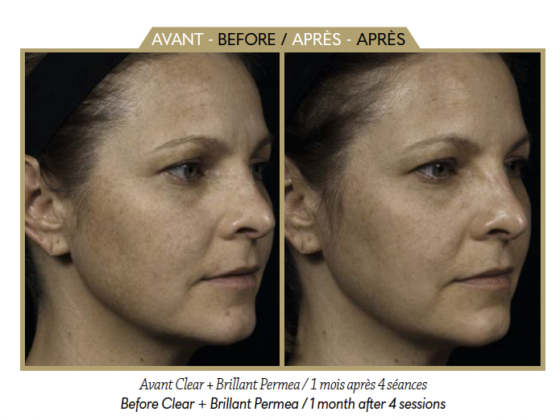
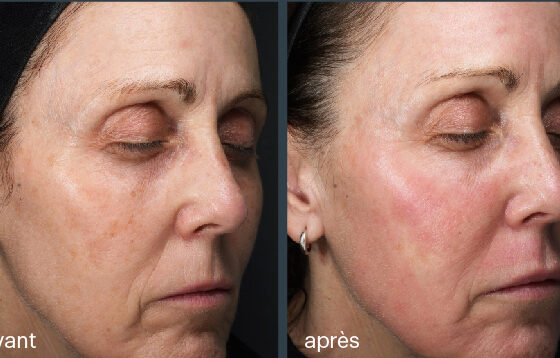
The combination is not merely additive: vascular stabilisation achieved with BBL is reinforced by the biostimulatory action of Pluryal® Silk, promoting long-term improvement in skin quality. Maintenance sessions are generally performed every four to six months with Pluryal® Silk, with additional BBL when clinically indicated. This approach leads to progressive reduction in erythema, improved skin homogeneity, and sustained reduction in sensitivity. It represents a true regenerative aesthetic strategy rather than simple symptomatic control.
Rosacea Enters Regenerative Era
By combining biostimulation with energy-based technologies, rosacea management fully embraces regenerative aesthetics—offering a modern, durable, and physiology-driven vision focused on skin quality and long-term stability.
Dr Fatma Pelin Ozgen
Board-certified dermatologist and academic specialising in cosmetic dermatology, skin cancer, and dermatologic surgery. Head of Dermatology at Üsküdar University. Founder and Lead Dermatologist at Pelin Ozgen Clinic, Istanbul. Author of 100+ publications, focused on acne, psoriasis, and advanced skin treatments.
Infos: fatmapelinozgen.com