
Reconsidering the Pelvic Floor Through a Comprehensive Medical Approach
Dr Nadège Roquet
A gynecologist’s perspective on a functional, non-invasive and still under-addressed approach to pelvic floor disorders.
In daily clinical practice, pelvic floor disorders remain largely underreported. Yet urinary leakage, intimate discomfort, and loss of pelvic floor tone can significantly impair quality of life. With a more preventive and integrative approach to women’s health, these symptoms deserve to be identified and managed earlier in the patient journey. In my practice, patients rarely mention urinary incontinence or pelvic discomfort spontaneously. However, when a few targeted questions are incorporated into the intake assessment — “Do you avoid certain sports activities?”, “Do you experience leakage when coughing or laughing?”, “Has your intimate comfort changed?” — the issue emerges very quickly.
Many women still perceive these symptoms as “normal” after childbirth, during menopause, or simply with aging. Some have attempted pelvic floor exercises or Kegel rehabilitation inconsistently, while others are reluctant to seek medical advice altogether. Nevertheless, the impact on quality of life is often substantial: cessation of physical activity, loss of self-confidence, social embarrassment, and impaired sexual well-being.
It was within this context that I became interested in pelvic floor muscle strengthening technologies such as EMSELLA®. Beyond the technological aspect itself, what particularly drew my attention were the functional outcomes and imaging data available in the literature. Studies conducted with HIFEM® technology demonstrate deep stimulation of the pelvic floor musculature with progressive restoration of neuromuscular control. Several MRI and ultrasound-based studies have also documented measurable muscular changes following treatment.
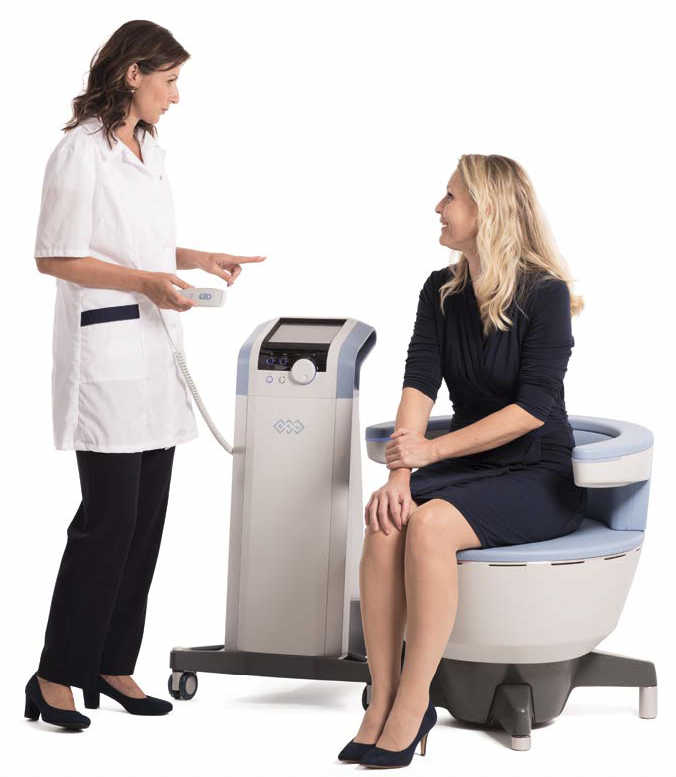
From a practical standpoint, one of the main advantages lies in the simplicity of the protocol: patients remain fully clothed, sessions last less than thirty minutes, and no social downtime is required. Depending on the indication and the severity of pelvic floor laxity, a protocol of six to eight sessions is generally recommended. This ease of treatment clearly improves therapeutic adherence, particularly among active patients who had previously postponed any form of management. The patient population remains predominantly female: postpartum women, peri-menopausal patients, and high-impact athletes. However, several colleagues — particularly in urology and functional medicine — have also shown growing interest in these technologies following the publication of studies on the male pelvic floor, especially in the post-prostatectomy setting.
Several multicentre studies report significant improvements in urinary symptoms and intimate well-being. A 2023 publication notably demonstrated a 68% improvement in incontinence symptoms at 12 months. Other studies also report enhanced sexual satisfaction and improved intimate comfort in certain patients presenting with pelvic floor weakness. Over time, I believe our role as clinicians is evolving: it is no longer solely about treating established pathology, but also about identifying early functional imbalances that progressively alter quality of life.
The pelvic floor remains an insufficiently addressed topic during routine consultations. Yet a few targeted questions are often enough to uncover a longstanding and highly impactful condition for patients. Non-invasive approaches such as EMSELLA® now offer an interesting complementary option within a comprehensive, functional, and preventive management strategy.
Dr Nadège Roquet

Dr. Nadège Roquet is an obstetrician-gynecologist specialised in functional and aesthetic gynecology as well as intimate surgery. She supports women in preserving their gynecological health, intimate well-being, confidence, and feminine quality of life. Clinique Esthétique Aquitaine Bordeaux.
Infos: chirurgie-intime-femme.com