Dr Sandrine Sebban
With growing demand for natural-looking results, contouring is emerging as an innovative approach in aesthetic medicine. By working on the contours rather than the centre of the face, this technique provides a subtle, long-lasting lifting effect while respecting the patient’s identity.
ANTI-AGE & LONGEVITY MAGAZINE: What is the main demand from your patients today?
DOCTEUR SANDRINE SEBBAN: Today, patients are primarily looking for natural and discreet results. They want to appear well-rested and in better shape, without any clearly identifiable intervention. The trend is toward a “healthy glow” effect rather than visible transformation. Contouring effectively meets this type of expectation.
AALM: What clinical signs indicate contouring?
DR. S.S.: Signs of facial sagging, loss of structure, and skeletalisation are key indicators. A face that appears heavy in the centre, with pronounced folds and jowls, is an ideal candidate for this comprehensive approach.
AALM: How does this approach differ?
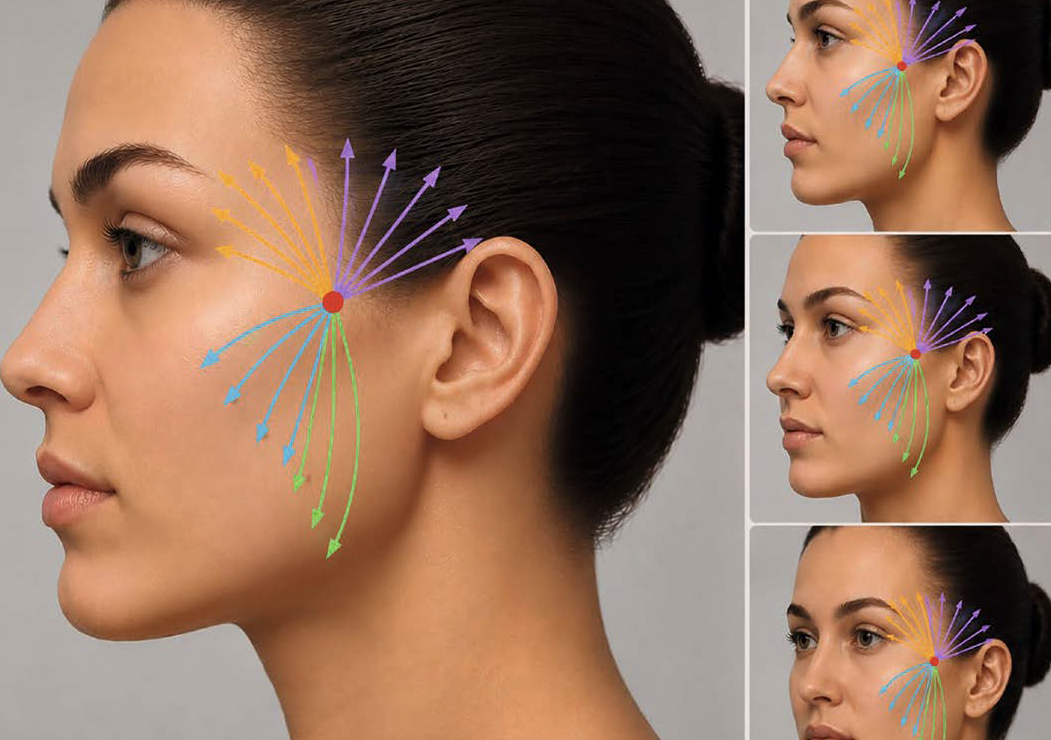
DR. S.S.: Unlike traditional injections that target a specific area, contouring works indirectly. By injecting on the sides of the face, an indirect lifting effect is achieved in the mid-face without overloading the central tissues. It allows for a natural lifting effect, better volume harmony, and reduces the risk of a “puffy” appearance. The results are subtle: improvement is noticeable without revealing the injection itself.
Contouring often requires 4 to 6 syringes, which can seem costly at first. However, it represents an optimised investment for patients because it structures the face sustainably, avoiding repeated corrections year after year. The products are injected into less mobile areas, often at the bone level, limiting migration and prolonging longevity. This is done through just two entry points: one located on the zygomatic arch for the supra-auricular temporal and tragal regions, and sometimes another along the mandibular line for the lower third of the face. The results appear more natural as they respect the anatomical lines of the face. By repositioning volumes along the contours, natural balance is restored without altering expressions.
AALM: Does it allow better control of the result?
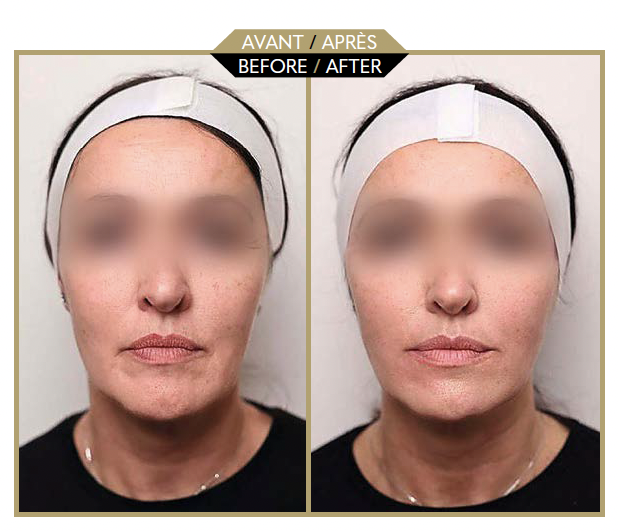
DR. S.S.: Absolutely. Since the injected areas are more stable, product placement is more predictable, with fewer side effects and less migration. However, it requires a strong understanding of anatomy and appropriate product selection. Some areas are more accessible and anatomically safer than the central face, which helps balance the overall complexity of the technique.
AALM: What is expected from a hyaluronic acid?
DR. S.S.: A strong projection capacity, good elasticity, excellent tissue integration, and optimal stability. The product must provide lift without creating irregularities. ESTYME® SCULPT demonstrates these characteristics, offering both structural projection and malleability, making it well suited for this area. It is a “trimorphic” volumiser that balances structural support, hollow correction, and contouring—key for this technique. Not all volumisers are interchangeable for this approach. For example, a product that is too cohesive may create irregularities that are difficult to correct, particularly in fat-deficient areas such as aging temples.
AALM: Which patients would you recommend this approach for?
DR. S.S.: Mainly patients aged 50 and above with sagging and loss of structure, but also younger individuals seeking harmonization. Some faces are less suitable, such as long faces, already well-contoured faces, or those with minimal lateral hollowing. This technique can be applied to both men and women, while respecting gender-specific aesthetic criteria. Female faces typically feature softer, more convex lines in the mid and lateral regions, whereas male faces tend to have more pronounced and angular projection points. Patients who benefit from this technique respond very positively. They notice an overall rejuvenation effect without being able to identify exactly what has changed. Others perceive a more rested, youthful appearance without visible transformation—the patient simply looks “well.”
Contouring is now a key technique in aesthetic medicine, combining effectiveness, discretion, and respect for facial identity. With a controlled and natural correction, it prioritises overall harmony and durability while avoiding excess and the “overfilled” look, supporting the aging process with subtlety and precision.
Discover this topic at the SFME Symposium “The Contemporary Face: Beyond Volume, Contouring”, chaired by Dr Sandrine Sebban and Dr Sophie Converset, on Friday, September 25, 2026, from 2:00 pm to 3:00 pm, in Room 243
Dr Sandrine Sebban
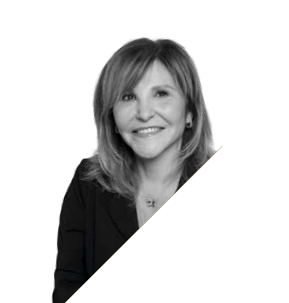
Physician specialised in aesthetic medicine, with 20 years of experience across the full spectrum of aesthetic medical procedures.
Inventor of the “STOP Facial Ageing Method” (2017), the “SoftFil® EasyGuide pilot needle”, and “Topilase” (topical hyaluronidase). She is a recognised authority in aesthetic medicine and trains experts in France and internationally. Her approach combines precision and finesse to enhance each face with naturalness and elegance.
Infos: drsebban.com