Aesthetic medicine procedures can be highly effective in treating dark spots and evening out skin tone. However, they also carry a significant and frequently feared risk: post-inflammatory hyperpigmentation (PIH). An innovative solution can now support patients at home, helping to make these procedures safer and maximise their outcomes.
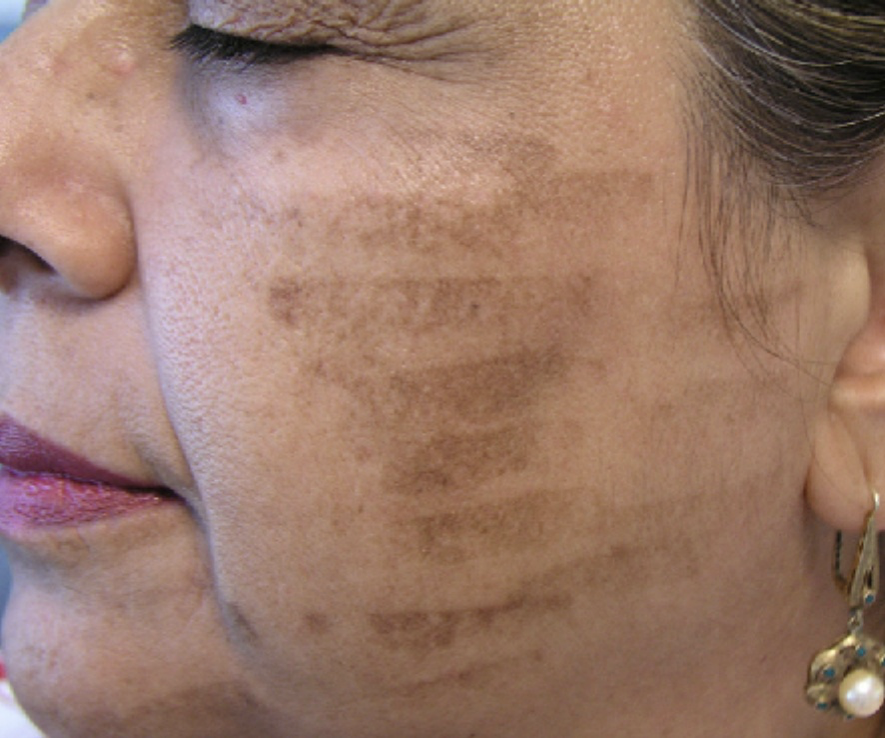
This is a concerning clinical reality with which aesthetic practitioners are very familiar: the thermal or chemical trauma caused by an aesthetic procedure triggers inflammation. Among patients with Fitzpatrick skin types III to VI—medium to dark skin tones—nearly one in two develops post-inflammatory hyperpigmentation following a procedure. In other words, a treatment intended to reduce dark spots may, through a “rebound effect”, result in the appearance of new areas of pigmentation.
How, then, can the risks associated with aesthetic procedures be reduced and patients given the best possible outcomes? The answer lies in appropriate at-home support.
THE MELAFLASH HOME SET: A PROTOCOL DESIGNED TO SUPPORT AESTHETIC PROCEDURES
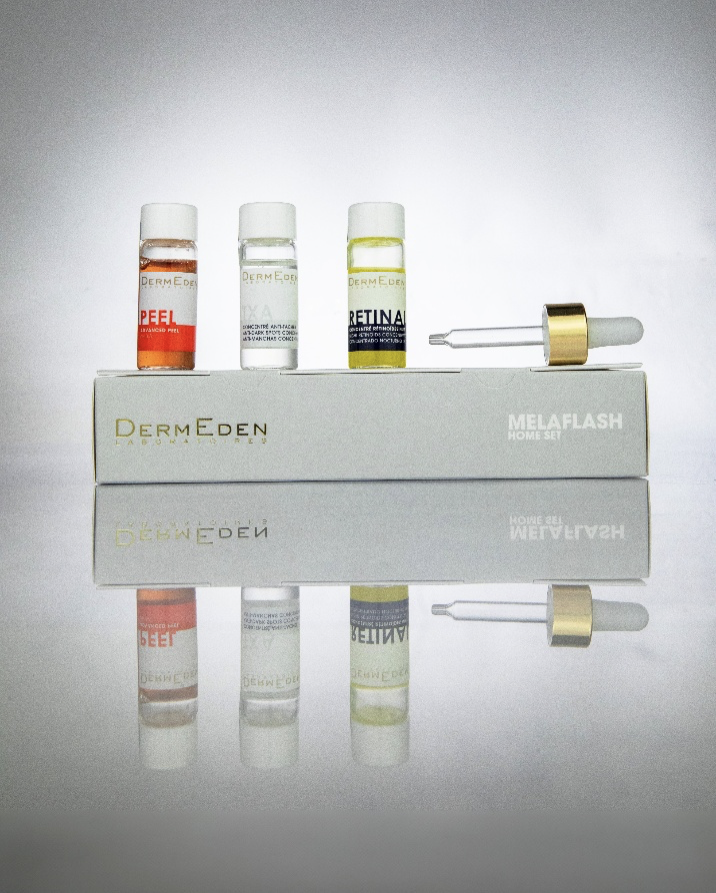
Hyperpigmentation cannot be treated solely on the day of the procedure in the practitioner’s clinic. It requires a continuous skincare approach. With this in mind, DERMEDEN Laboratories developed the Melaflash Home Set.
Rather than a single cosmetic product, it is a complete support protocol designed to be used by patients at home at three key stages of their aesthetic treatment journey:
- Before the procedure—preparation: it helps to put melanocytes “at rest” and prepares the skin to limit its inflammatory response to the effects of laser treatment or a chemical peel.
- Between sessions—maintenance: it complements the medical treatment by continuing to actively reduce underlying hyperpigmentation.
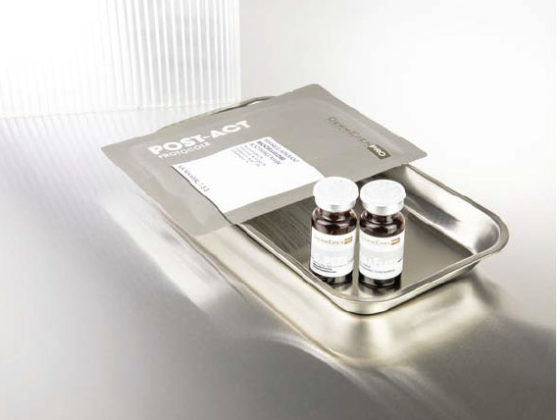
- After the procedure—risk reduction: it helps interrupt the post-traumatic inflammatory cascade, thereby preventing the onset of PIH and the well-known rebound effect.
THE SECRET BEHIND THE SET: AN EXPERT SYNERGY OF THREE PRODUCTS
To achieve this, the Melaflash Home Set does not rely on a single skincare product. It provides a complete three-step protocol targeting the various mechanisms involved in inflammation and pigmentation.
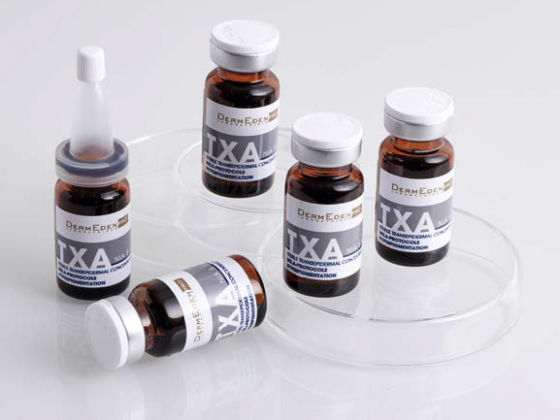
1. Dark Spot Concentrate—5% tranexamic acid and 10% niacinamide
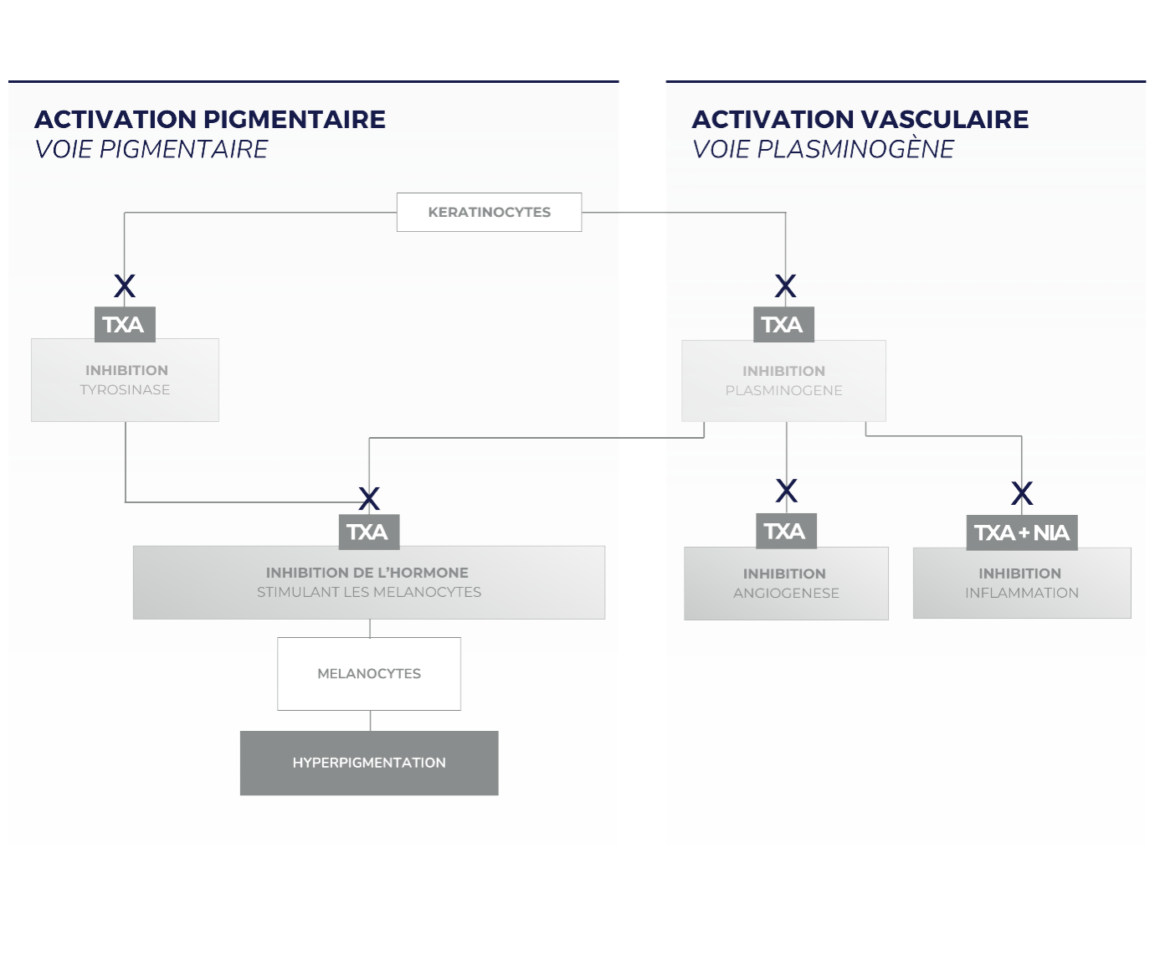
This is the protocol’s “game-changing” product, formulated around a molecule with established use in hospital medicine: tranexamic acid (TXA). The concentrate provides a distinctive dual mechanism of action:
- TXA (5%) stands out for its dual action on plasminogen activity and pigmentation. It inhibits tyrosinase—the enzyme involved in melanin production—while also blocking activation of the plasmin pathway, thereby interrupting the inflammatory and vascular cascade induced by the aesthetic procedure.
- Niacinamide (10%) complements this action by helping to prevent the transfer of residual melanin to the surface of the skin. Its key technological advantage? The unique formulation of this DERMEDEN concentrate provides dermal penetration that is 14 times greater than that of other serums available on the market.
2. Gentle At-Home Peel—20% encapsulated glycolic acid
To accelerate cell renewal while controlling inflammation, the set includes a targeted peel. Encapsulation of the 20% glycolic acid allows the skin to be gently exfoliated, removes dead cells containing excess pigment and prepares the skin to receive the active ingredients, without causing irritation.
3. Retinoid Concentrate—stabilised and encapsulated retinoids
To complete the long-term treatment, this third product harnesses the benefits of retinoids. Stabilised and encapsulated to ensure optimal tolerability, they stimulate epidermal renewal, smooth the skin’s texture and reinforce the protocol’s overall depigmenting action.
The complete Melaflash protocol can be used without any restriction on duration and has been clinically proven to be suitable for all Fitzpatrick skin types.
CONCLUSIVE CLINICAL RESULTS
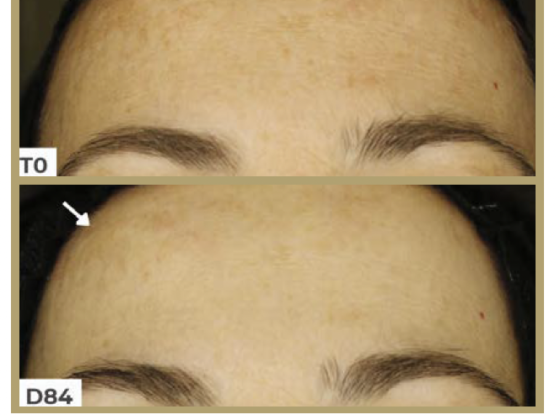
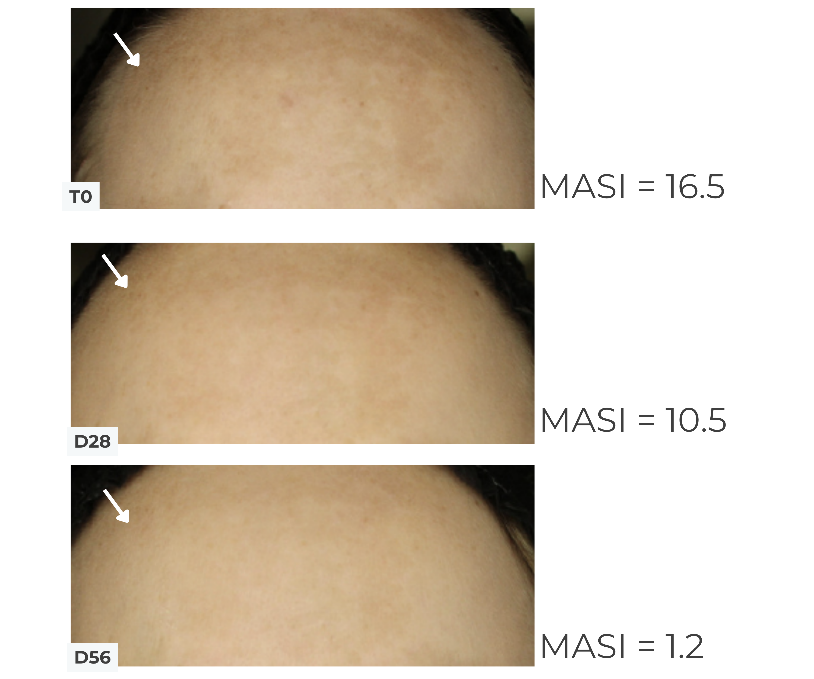
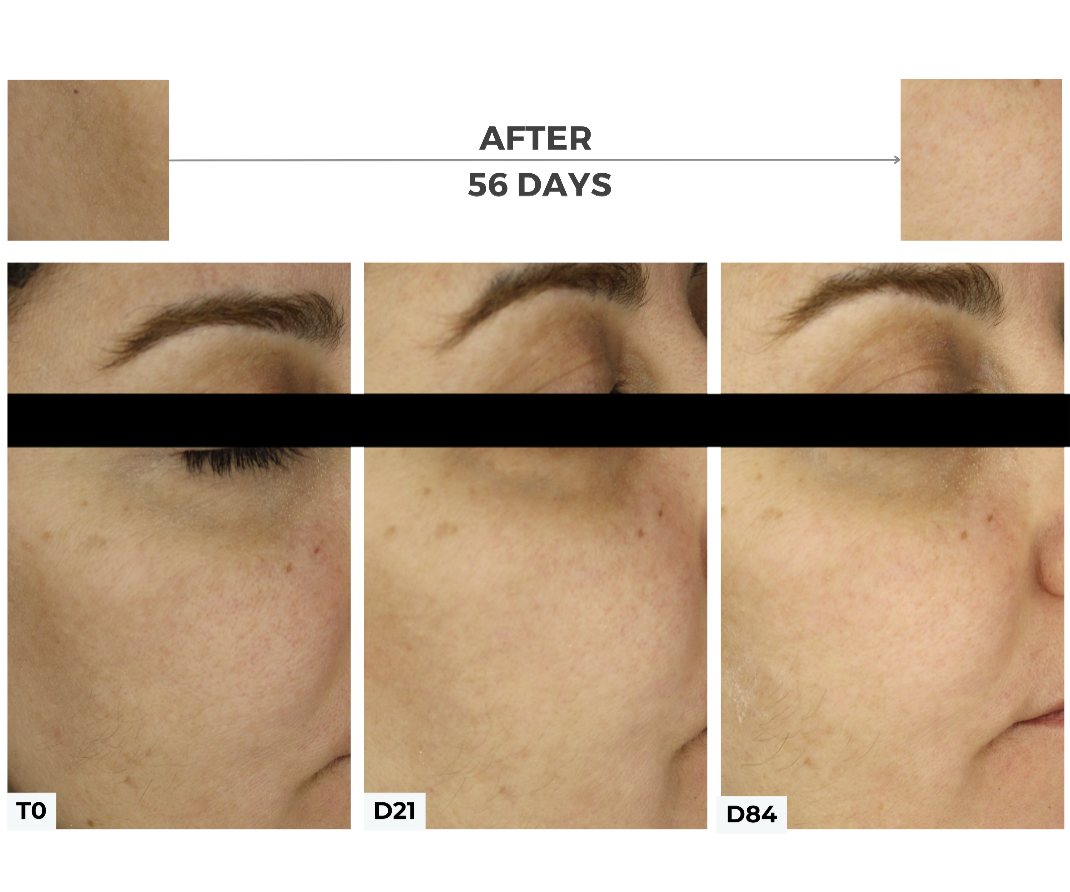
The efficacy of this at-home protocol is not merely a promise: it has been clinically demonstrated. A dermatologically controlled 84-day study involving participants with pigmentation disorders—including melasma, solar lentigines and PIH—reported the following results:
- Continuous and rapid depigmenting action: measurements showed a reduction of up to 30% in melanin levels, together with a marked decrease in the MASI score—which assesses the severity of melasma—reaching 93% after two months. A visible reduction in the intensity of dark spots was reported by 81% of participants.
- Significantly enhanced skin radiance: skin radiance increased by 84% within the first month, reaching up to 267% after 84 days. A more even overall complexion was observed in 90% of participants.
- Excellent tolerability: despite the use of potent active ingredients, including acids and retinoids, no adverse effects were reported, while excellent skin tolerability was observed in 96% of participants. This included individuals with dry or sensitive skin, who represented 55% of the study group.
The complete Melaflash protocol can be used without any restriction on duration.
EXPERT OPINION: WHY ARE PRACTITIONERS ADOPTING IT?
This comprehensive approach has rapidly gained the confidence of healthcare professionals. As aesthetic practitioner Dr Arnaud Lambert explains, incorporating tranexamic acid and niacinamide into patients’ skincare routines has become essential.
In his clinical practice, prescribing the Melaflash Home Set serves three key purposes:
- Preparing and protecting the skin of patients at high risk of PIH before an aesthetic procedure.
- Improving and prolonging the outcomes of treatments targeting pigmentation disorders, including melasma and solar lentigines.
- Treating inflamed skin: owing to their strong anti-inflammatory properties, this combination of active ingredients may also be particularly effective in managing conditions such as rosacea, especially when the skin barrier is impaired.
To learn more about professional support protocols and at-home skincare, visit the official website at www.DERMEDEN.com or email info@dermeden.com. You can also read the full feature in the latest issue of ANTI-AGE Magazine.