Pr Claude Aharoni
A specialised radiance boost
The Deep Plane Facelift made an appearance in France in recent years as a premium approach to a facelift and marked a key advance in facial rejuvenation methods. Unlike classic facelifts, which are limited to the most superficial planes, the Deep Plane Facelift allows us to tackle the deep facial structures, where sagging originates, for the first time. This technique therefore offers a more natural-looking rejuvenation and enhanced durability compared with the standard facelift techniques.
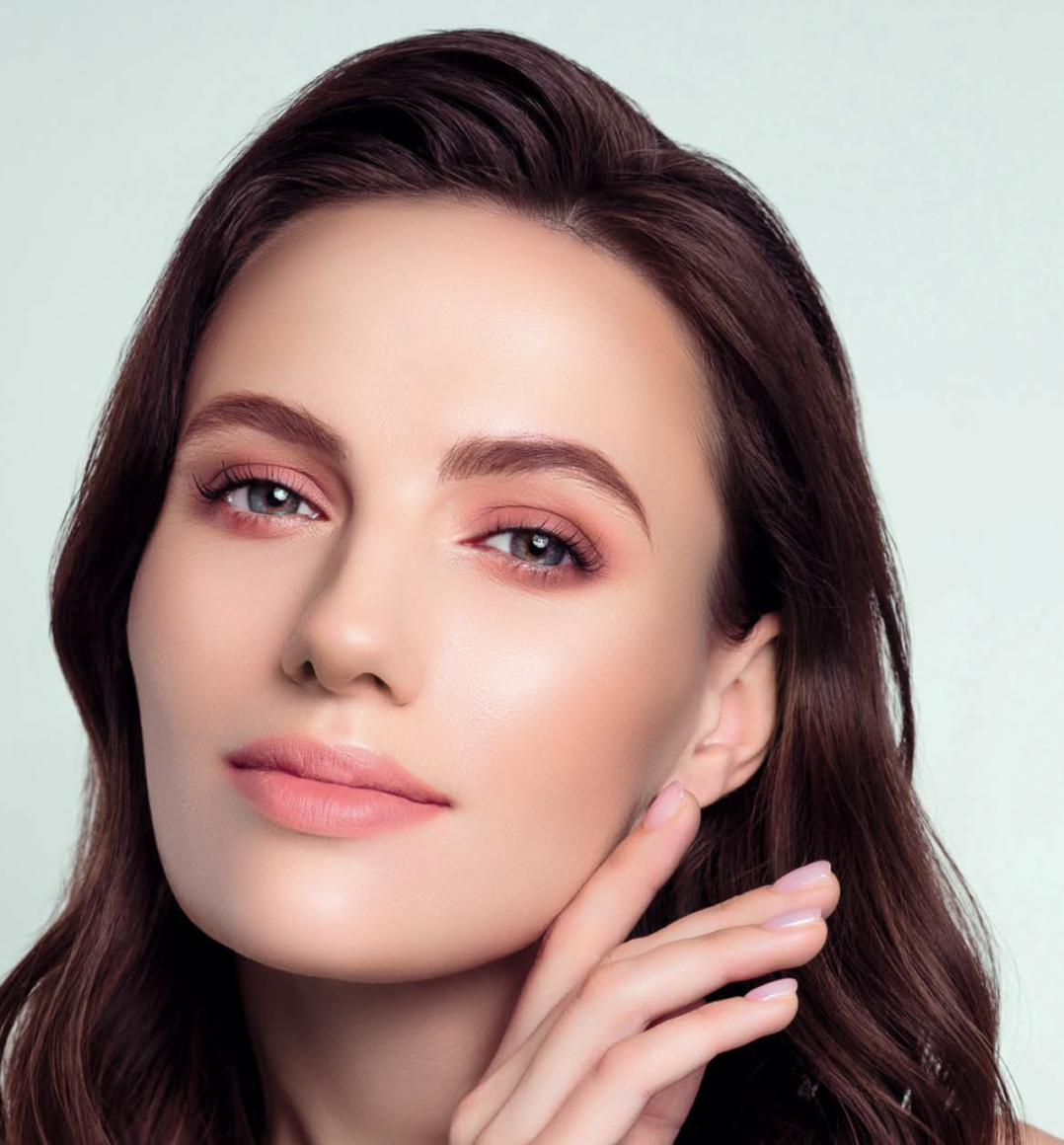
The innovation for 2024–2025 is the whole-face endoscopic approach, with no visible scars. We detach the whole deep plane of the face in order to accurately select the tissues and vectors along which we want to pull them. For the first time, it is now possible to redefine the face’s deep structures – the deep plane – without the long incisions and long scars associated with classic facelifts. The absence of visible scars has earnt this technique the name “Scarless Endoscopic Facelift”. This high-tech method allows us to reposition the deep facial volumes rather than simply pulling the skin upwards, giving a natural-looking lift without any surgical scars. It is a silent yet spectacular revolution: a powerful, anatomical and invisible lift, where technology enhances the art of surgery to erase the signs of aging without a trace.
The endoscopic lift uses a tiny camera (endoscope) coupled with very small incisions, hidden in the hairline, to reposition the deep tissue on the forehead, eyebrows and/or midface (cheeks, tear trough). Hidden incisions behind the ears are needed to reposition the detached tissue in the lower face (oval and jowls). Thanks to the endoscope, the surgeon can see the face’s anatomical planes in real time, magnified and in 3D, making the detaching and repositioning of the facial tissues more precise. The aim is to open up the expression, lift the cheeks, correct the oval and soften any areas of shadow with, as a bonus, almost-invisible scars and a recovery time that is much shorter than for a traditional facelift. We are able to lift the whole face and/or neck. This method represents the new generation of facelifts, which focus on beautification as the main desired result.
Why do American celebrities love it so much?

1.The “Beautification” trend: In the beauty industry media, we are seeing more personalised and combined lifts (Endoscopic Brow Lift, Deep Plane Facelift, lipofilling, mini rhinoplasty) on much younger patients, with the aim of beautifying rather than rejuvenating.
2. “Camera ready” results: a more open expression, higher cheekbones, lighter features, no surgical scars. The small, hidden incisions and targeted dissection of the deep planes explain this subtle finish.
3. Shorter downtime: less detached skin = swelling/bruising that subsides more quickly than after lifts that involve larger incisions, which is a bonus when the patient has a busy schedule.
4. More durability: objective patient follow-up showed an improvement to the middle third of the face (height of the cheekbones, nasolabial folds) which lasts several years.
Celebrities and public admissions
- Kris Jenner admitted having a facelift: though she did not say whether it was endoscopic or not, her rejuvenated appearance and short recovery time led many to believe she had had this minimally-invasive procedure.
- In the beauty industry press, several American journalists have reported on their endoscopic brow lift, giving an insight into the real after-effects: minimal swelling and “radiant” results after just three weeks.
Limitations and common preconceptions
- Not all facelifts are endoscopic: depending on the indication (neck, severe jowls), a deep plane and a classic SMAS facelift may be combined to treat the lower face. This so-called hybrid approach is common in 2025.
- The technique still requires some recovery time: despite the minimal incisions, patients still reported some bruising and swelling for 1-2 weeks, with results that are “refined” over several months.
Indications:
A full medical assessment is essential before any procedure, including a detailed facial examination in order to define the indications. We can treat patients who have:
- Moderate sagging on the forehead, eyebrows or middle third of the face (cheekbones, nasolabial folds).
- Good skin elasticity (often patients aged 30 to 55).
- Limited excess skin (otherwise a classic facelift might be better).
- Above all, realistic expectations: natural-looking results, a subtle improvement.
Technical conditions for the operation
- Out-patient surgery
- Under general anaesthetic or local anaesthetic with sedation
- Small incisions (1 to 2cm) hidden behind the hairline or at the temples, and sometimes hidden incisions behind the ears.
- Uses an endoscope (tiny camera) to visualise and detach the tissues on the whole face.
- The tissues are anchored with sutures or resorbable fixation implants.
- Operation duration: 2 to 3 hours, depending on the areas treated.
What does a “good” result look like?
- Forehead/eye area: eyebrows repositioned to their youthful height, upper eyelids lifted, softened glabellar line, no exaggerated arch.
- Midface: lifted cheekbones, softer under-eye hollows, less pronounced nasolabial folds.
- Lower face: a clean oval with no jowls and smoother expression lines.
After-effects and recovery:
- Usually pain-free, just mild discomfort for 1 to 2 days.
- Bruising and swelling: 1 to 2 weeks.
- Stitches out on day 7–10.
- “Socially presentable” results after about 2 weeks.
- Long-term results after 2 to 4 months.
The endoscopic lift stands out as a tool for achieving the “rested face” look we see on the red carpet: hidden scars, faster recovery and natural-looking results.
Pr Claude Aharoni
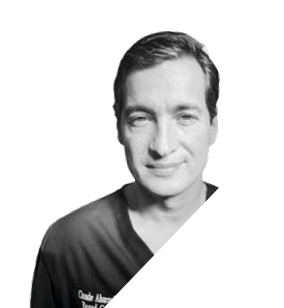
Former hospital house doctor and clinic head. European board of plastic and reconstructive surgery. Graduated from the faculty of aesthetic, plastic and reconstructive surgery. Founding member of the Paris Etoile aesthetics clinic.
More: aharoni-esthetique.fr