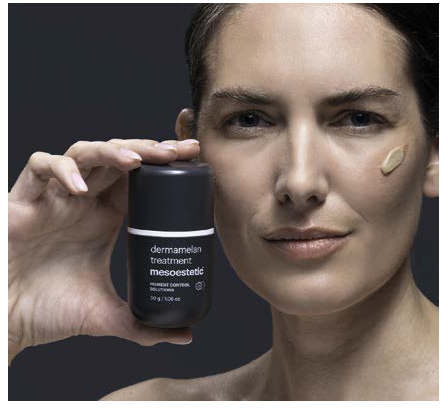
Dark circles are not just about melanin.
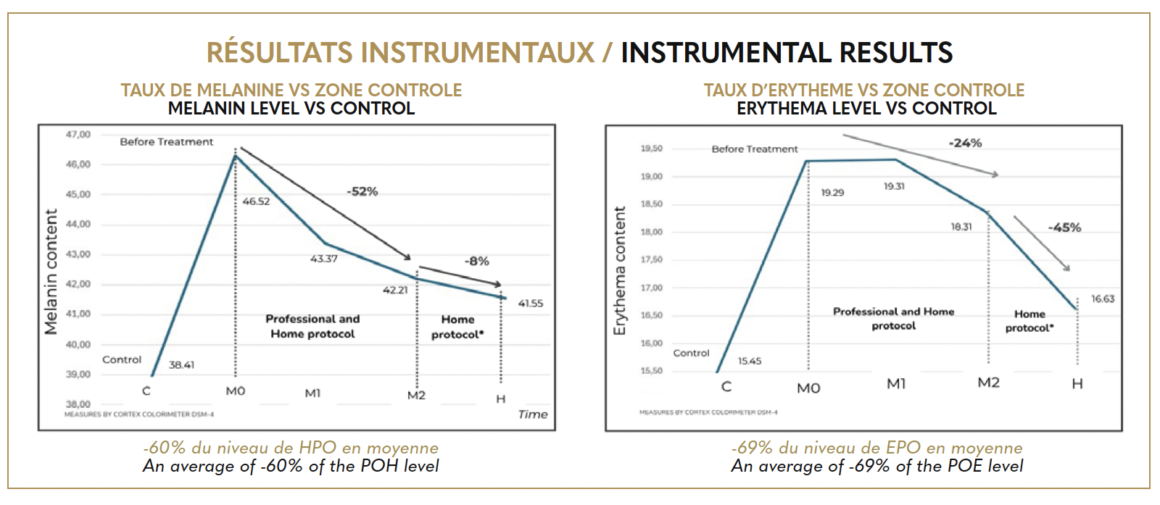
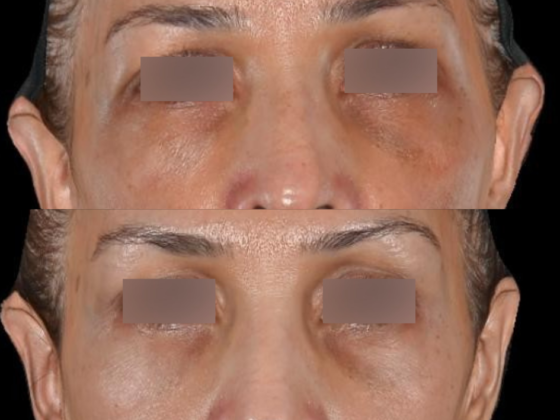
Ultra-thin skin, a vascular network right below the surface, a heightened PIH risk: the eye contour concentrates every difficulty of pigment management. The final results of DERMEDEN Laboratories’ multicentric study — 75 patients, 4 countries, 3 continents — mark the beginning of a new era: –76% pigmentation in Japan (-60% global), –69% erythema, zero rebound.
A THERAPEUTIC DEAD END
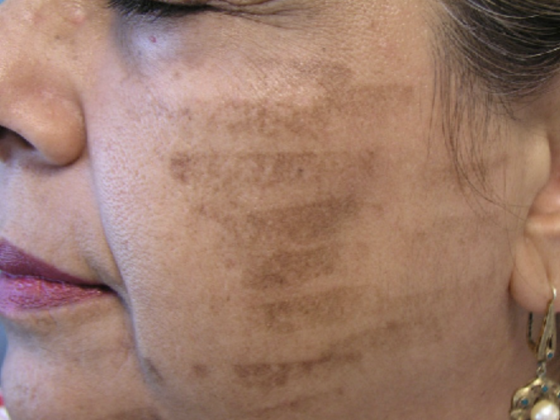
Pigmented dark circles are among the most common reasons for consultation in aesthetic medicine, yet no goldstandard treatment has emerged. Lasers, peels, and fillers quickly reach their limits in an area where the skin is only 0.5 mm thick, highly vascularised, and associated with a risk of post-inflammatory hyperpigmentation (PIH). Laboratoires DERMEDEN therefore conducted a new multicentre study to evaluate an innovative protocol for the management of periorbital hyperpigmentation (POH).
INFLAMMATION, THE MISSING LINK IN THE PATHOPHYSIOLOGY
This new multicentre study led to a major finding: 100% of patients presented with high baseline periorbital erythema (POE), correlated with the level of pigmentation—revealing that dark circles are as much inflammatory and vascular as they are melanotic. Treating them solely through tyrosinase inhibition therefore means addressing only half of the problem. This highlights the value of 5% Tranexamic Acid, which blocks the plasmin pathway—and its associated inflammatory and vascular mediators—combined with 10% Niacinamide, which helps inhibit melanosome transfer.
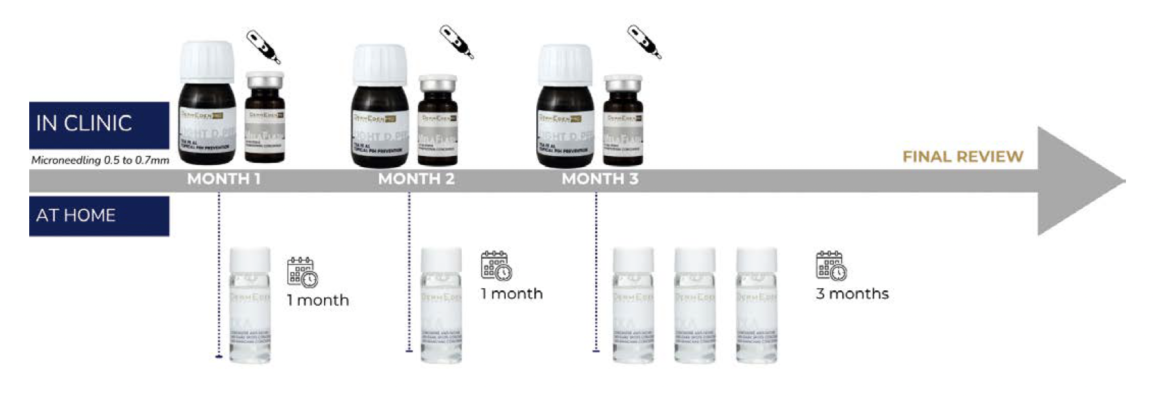
Japan, Malaysia, Mexico, and Spain, under dermatological supervision: 3 sessions at 4-week intervals, combining a depigmenting peel (8.5% Lactic Acid + 5% TXA + 2% Ferulic Acid) with epidermal microneedling at 0.3–0.7 mm, using the sterile MELAFLASH TXA 5% + NIA 10% concentrate. At home: TXA 5% + NIA 10% concentrate twice daily, combined with SPF 50, for 5 months. Measurements were performed using the Cortex DSM-4 colourimeter.
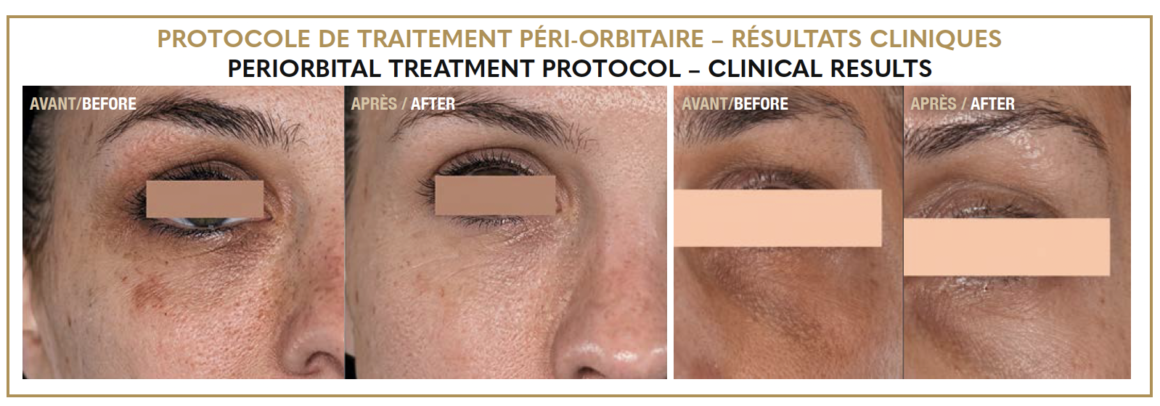
IMPRESSIVE RESULTS : –76% PIGMENTATION IN JAPAN, –69% ERYTHEMA FOR ALL COUNTRIES
Across the whole panel, POH level dropped by 60% versus the control zone and POE by 69%. Microneedling acts as a depigmentation accelerator: –52% during the professional phase alone. The home protocol then takes over (a further –8% on pigmentation, –45% on erythema) and, above all, prevents rebound. No rebound effect and no case of PIH were reported, across all phototypes.
THE DARKER THE CIRCLE, THE BETTER THE RESPONSE
The study demonstrates that severe POH responds better to the professional in-clinic protocol, while the at-home treatment helps prevent pigmentary rebound but does not further contribute to the reduction of pigmentation. For these patients, a protocol involving more frequent professional sessions therefore appears relevant. Conversely, mild to moderate POH responds better to the at-home treatment alone.
Study conducted under the direction of Dr Nicolas BACHOT, dermatologist and Scientific Director of Laboratoires DERMEDEN, and Dr Barbara DALBOS, epidemiologist, Head of the Aesthetic Department at SHA Wellness Medical Clinic and member of the DERMEDEN Scientific Committee. The tested protocol: LIGHT D.PEEL depigmenting peel, sterile MELAFLASH TXA 5% + NIA 10% concentrate.