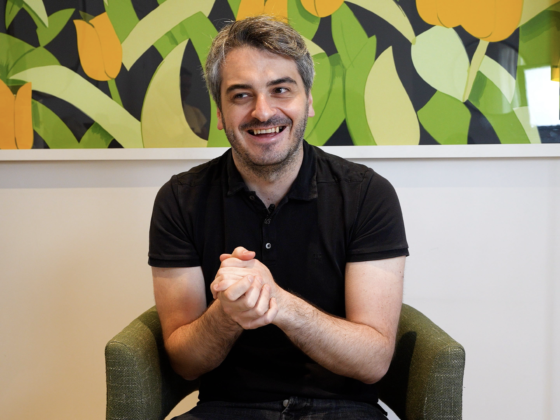
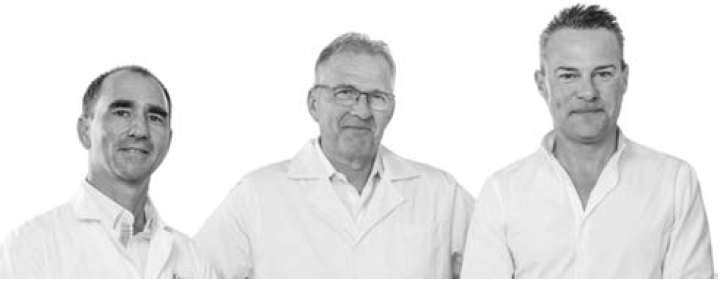
Pr Jean-Marc Lemaître, Inserm research director and worldrenowned expert in cellular reprogramming, and Marc Bessoles, entrepreneur, co-founded (With Paul Ben Sadoun) Skinomix.ai to translate precision biology into personalised cosmetic care through AI and multi-omic analysis.

Multi-omic analysis combined with artificial intelligence is redrawing the contours of a precision cosmetic science, that is individual and predictive.
For decades, cosmetics has relied on universal promises. Today, multi-omic analysis combined with artificial intelligence is paving the way for precision beauty: reading the unique biology of every skin to formulate the care that truly matches it.
I. THE END OF “AVERAGE” COSMETICS
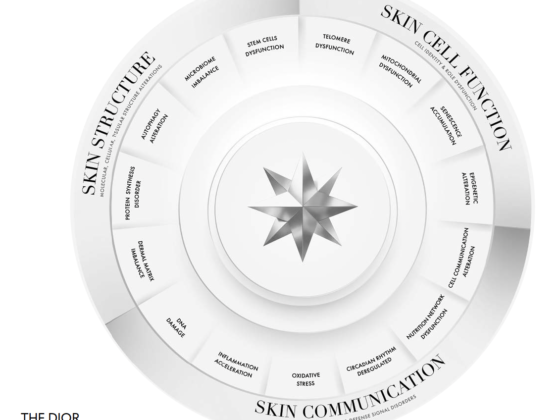
Skin aging follows no universal rule. Two skins of the same chronological age can display distinct biological ages, sometimes separated by more than a decade [3]. This heterogeneity reflects the differential expression of the hallmarks of aging, whose reference mapping, established by López-Otín and colleagues [4], now represents scientific consensus. Yet the cosmetics industry has long formulated its products for an “average skin”: a standardised model, built from heterogeneous cohorts, that tends to erase genetic, metabolic and environmental differences, the skin exposome, making every epidermis a unique biological signature. Just as medicine has entered the era of personalised medicine through high-throughput molecular tools, cosmetics can today cross a comparable threshold: that of personalised cosmetics, founded on the fine biological reading of each skin and on guiding individuals toward the care that best matches their own needs.
MULTI-OMICS: READING THE MOLECULAR LANGUAGE OF SKIN
The multi-omic approach consists of analysing several layers of biological information simultaneously. Genomics identifies variants associated, for example, with pigmentation, collagen production or sensitivity to oxidative stress. Epigenomics does not modify the DNA sequence, but studies the chemical marks deposited on or around DNA, notably DNA methylation and histone modifications. These marks act as a true conductor: they do not change the genetic score but modulate how it is interpreted by cells. They thus constitute a biological code in their own right, beyond the genetic code, capable of activating, slowing or silencing the expression of certain genes. It is precisely the reading of these epigenetic modifications, in particular DNA methylation profiles, that enabled the development of epigenetic clocks, among whose pioneers are Horvath and Hannum [1,2]. These tools now allow estimation of the biological age of an individual or a tissue. Transcriptomics measures the effective expression of genes within cells and tissues: it indicates which genes are actually active at a given moment. Proteomics quantifies the proteins produced, collagens, elastins, enzymes, cytokines, which constitute the final functional expression of the information encoded by genes. Metabolomics reveals the energetic and biochemical state of cells, notably NAD+ availability, a central marker of biological aging. In addition to these dimensions, the skin microbiome plays a key role: its balance modulates local immunity, the hydrolipidic barrier and the inflammatory response [6].
None of these layers alone can provide a complete molecular portrait of tissue aging in a biologically singular individual, in all the diversity of their biological dimensions. It is their integration that reveals the biological levers truly active in skin aging. A dysbiosis cannot be understood without the genetic, immune and inflammatory terrain that underlies it; a cellular energy deficit only makes sense in light of the transcriptional, protein and metabolic context in which it is embedded. Thanks to current technologies, these different dimensions can now be measured in complex tissues like skin, down to the single-cell level [11]. This resolution reveals a long-invisible heterogeneity: each individual is biologically unique, but within a single individual, each cell population, keratinocytes, fibroblasts, immune cells, also has its own molecular dynamics. Skin appears not as a uniform tissue, but as a living ecosystem, whose fine-grained reading opens the way to truly personalised cosmetics.
ARTIFICIAL INTELLIGENCE: TRANSLATOR OF BIOLOGICAL DATA
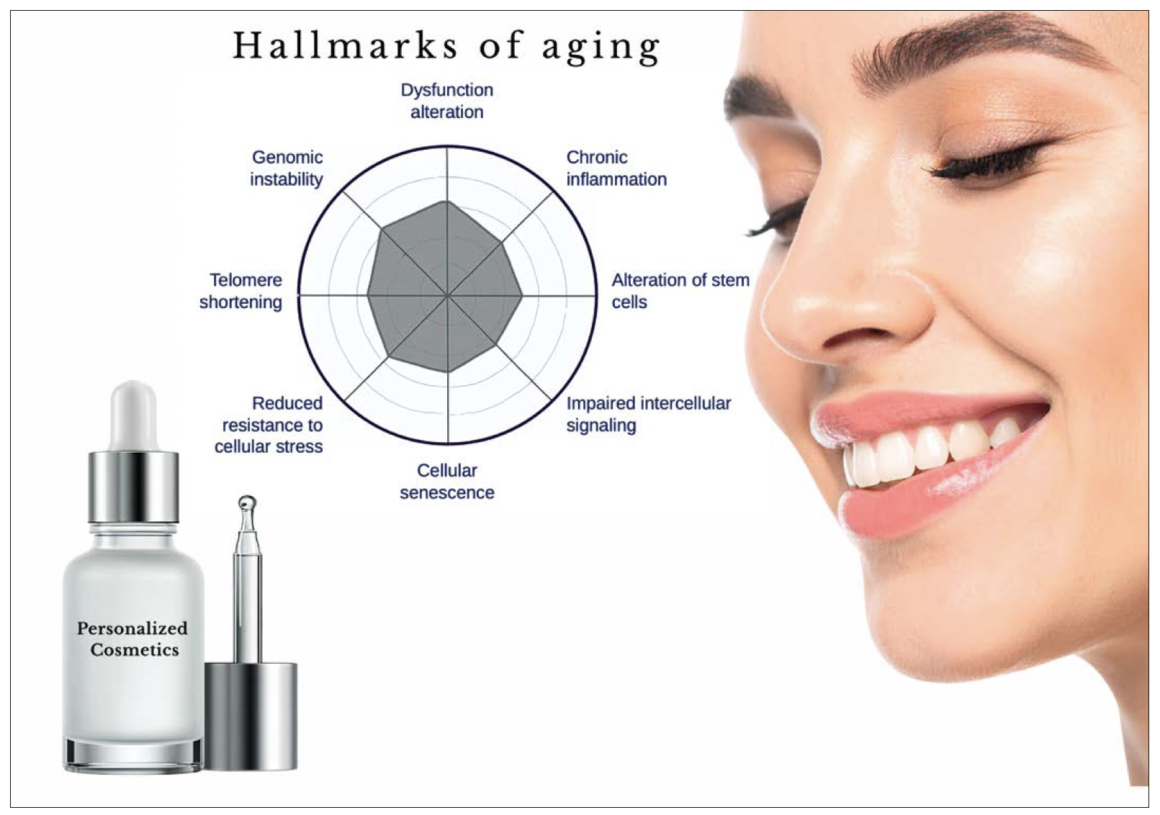
A multi-omic analysis can generate hundreds of thousands of variables per individual, up to nearly one million for certain epigenetic layers, notably when analysing DNA methylation. No human reading alone can extract biologically relevant recommendations from this complexity. Artificial intelligence, particularly deep learning models trained on cohorts combining skin phenotypes with molecular data, makes it possible to cross this threshold. It ranks biomarkers, identifies those that allow estimation of an individual’s biological age, then highlights the aging pathways most altered in that given profile. It thus pinpoints the priority signaling pathways to modulate and guides the selection of the combinations of active ingredients most consistent with the observed biological profile. Generative models also open up the exploration of chemical spaces that are difficult to access through empirical approaches, simultaneously optimising efficacy, skin tolerance and environmental footprint. Validated on advanced reconstructed human skin models, these approaches reach a degree of specificity that conventional cosmetics never made possible. This loop of biological data, algorithmic interpretation and experimental validation is drawing the new R&D architecture of personalised cosmetics.
2030 HORIZONS: SKIN PREDICTED BEFORE IT IS REPAIRED
Three major shifts are emerging. First, the transition from corrective to predictive cosmetics: thanks to molecular clocks, it will become possible to anticipate a skin’s aging trajectory and intervene long before visible signs appear. Second, dynamic formulation: care products will adapt in real time to biological parameters measured at home by miniaturised sensors, photometric applications and periodic epigenetic tests. Finally, convergence with longevity medicine: topical senolytics, partial reprogramming, for which proof of concept on senescent and centenarian human cells was provided by the pioneering work of the research team led by Prof. Lemaître [8], and sirtuin modulators will blur the boundaries between dermatology, biotechnology and cosmetics [9]. Precision beauty is no longer a distant horizon: it is the direct application of a science that is finally learning to respect the biological uniqueness of every individual.
Personalised cosmetics is no longer a promise: it is the culmination of a decade of progress in systems biology. By combining multi-omics and artificial intelligence, it ushers in an era where each skincare product becomes the biological translation of a human singularity.
References
[1] Horvath S. DNA methylation age of human tissues and cell types. Genome Biology, 2013; 14:R115. [2] Hannum G., Guinney J., Zhao L., Zhang L., Hughes G., Sadda S., et al. Genome-wide methylation profiles reveal quantitative views of human aging rates. Molecular Cell, 2013; 49:359-367. [3] Horvath S., Raj K. DNA methylation-based biomarkers and the epigenetic clock theory of ageing. Nature Reviews Genetics, 2018; 19:371-384. [4] López-Otín C., Blasco M.A., Partridge L., Serrano M., Kroemer G. Hallmarks of aging: An expanding universe. Cell, 2023; 186(2):243-278. [5] Levine M.E. et al. An epigenetic biomarker of aging for lifespan and healthspan. Aging, 2018; 10(4):573-591. [6] Byrd A.L., Belkaid Y., Segre J.A. The human skin microbiome. Nature Reviews Microbiology, 2018; 16:143-155. [7] Ocampo A. et al. In vivo amelioration of age-associated hallmarks by partial reprogramming. Cell, 2016; 167(7):1719-1733. [8] Lapasset L., Milhavet O., Prieur A., Besnard E., Babled A., Aït-Hamou N., Leschik J., Pellestor F., Ramirez J.M., De Vos J., Lehmann S., Lemaître J.M. Rejuvenating senescent and centenarian human cells by reprogramming through the pluripotent state.Genes & Development, 2011; 25(21):2248-2253. [9] Alle Q., Le Borgne E., Bensadoun P., Lemey C., Béchir N., Gabanou M., et al.A single short reprogramming early in life initiates and propagates an epigenetically related mechanism improving fitness and promoting an increased healthy lifespan. Aging Cell. 2022;21:e13714. [10] Fuentealba M., Rouch L., Guyonnet S., Lemaitre JM., de Souto Barreto P., Vellas B., Andrieu S., Furman D. A blood-based epigenetic clock for intrinsic capacity predicts mortality and is associated with clinical, immunological and lifestyle factors. Nature Aging. 2025;5:1059-1077. [11] Lu WH., Guyonnet S., Raffin J., Bessou-Touya S., Ravard Helffer K., Bianchi P., Le Digabel J., Bensadoun P., Lemaitre JM., de Souto Barreto P., Vellas B., IHU HealthAge INSPIRE/Open Science study group. Associations of skin biomechanical properties with biological aging clocks and longitudinal changes in intrinsic capacity in adults aged 20–93: the INSPIRE-T project. Aging Cell. 2025. [12] Grande de França N., Rolland Y., Guyonnet S., Bensadoun P., Lemaitre JM., Vellas B., de Souto Barreto P., et al.The role of dietary patterns on epigenetic and inflammatory aging based on the INSPIRE-T study. Communications Medicine. 2026. [13] Turesson A., Koochek A., Nydahl M., Lemaitre JM., Bensadoun P., Martinez LO., Guyonnet S., Rolland Y., Vellas B., de Souto Barreto P., IHU HealthAge INSPIRE/Open Science group. The associations between biological markers of aging and appetite loss across adulthood: retrospective case-control data from the INSPIRE-T study. GeroScience. 2025. [14] Sánchez-Sánchez JL., Valenzuela PL., Bensadoun P., Lemaitre JM., Vellas B., de Souto Barreto P., et al.Biological ageing acceleration and functional capacities across the lifespan in the INSPIRE-T cohort. [15] Valenzuela PL., Sánchez-Sánchez JL., Bensadoun P., Lemaitre JM., Vellas B., Sourdet S., de Souto Barreto P. Cross-sectional associations of epigenetic clocks with intrinsic capacity and functional ability in older adults with frailty and cognitive impairment: the COGFRAIL study. GeroScience. 2026;48:973-984. [16] Valenzuela PL., Sánchez-Sánchez JL., Bensadoun P., Lemaitre JM., Furman D., Vellas B., Sourdet S., de Souto Barreto P. Cross-sectional and longitudinal associations of an inflammatory aging clock with intrinsic capacity and functional ability in older adults with physical and cognitive impairments: the COGFRAIL cohort. The Journals of Gerontology: Series A. 2026. [17] Tavassoli N., de Souto Barreto P., Berbon C., Mathieu C., de Kerimel J., Lafont C., et al.HealthAge: evaluation of intrinsic capacity changes in translational ageing models: protocol and cohort profile. GeroScience. 2025.