Dr Khamzat Bekov
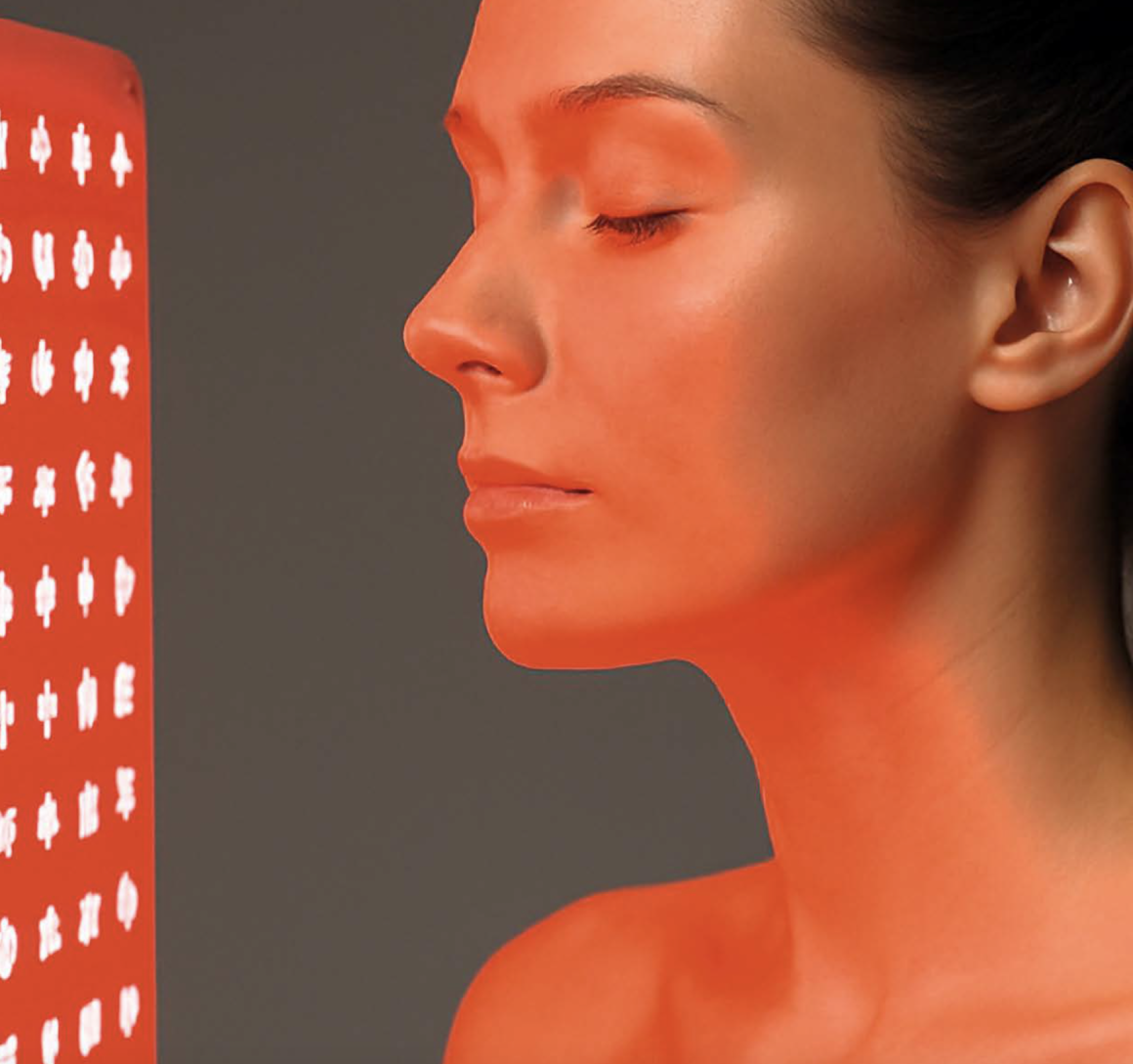
Light has long fascinated humankind for its effects on the body and mind. The ancient Egyptians and Greeks already used it to promote healing or improve wellbeing. Today, we know that certain wavelengths, emitted by medical LEDs, can genuinely stimulate skin regeneration without resorting to invasive treatments.
In my practice, I use these technologies to support skin aging in a gentle and targeted way. The results are not miraculous, but they are often visible after a few sessions, especially when combined with other preventive and care measures. What appeals to patients is the absence of pain and social downtime, and the profoundly natural aspect: nothing is filled, nothing is abraded; we simply encourage the skin to function better.
THE ORIGINS OF LIGHT THERAPY. FROM ANTIQUITY TO MODERN MEDICINE
Hippocrates and Asclepiades already recommended exposure to sunlight for certain skin conditions or to improve mood. Later, in the 19th century, Niels Finsen showed that artificial light could treat tuberculosis of the skin, paving the way for our modern technologies. His work highlighted a fundamental principle: not all wavelengths have the same effect on the human body, and some can be used with great precision to stimulate specific biological mechanisms.
LED — (LIGHT EMITTING DIODE): A TARGETED APPROACH
LEDs have the advantage of producing precise wavelengths without heating the tissues. In practice, this means that cells can be stimulated without the risk of burns or excessive inflammation. Light acts primarily on the mitochondria, increasing cellular energy production and promoting the synthesis of collagen, elastin and repair enzymes.
Unlike lasers, LEDs do not damage the skin in order to induce repair; they encourage it to regenerate more effectively by itself. This gentler “biostimulatory” philosophy corresponds very well to patients’ current expectations in terms of aging prevention.
DIFFERENT TYPES OF LED AND THEIR USES
• Red (620–660 nm): promotes skin regeneration and radiance. Useful for fine wrinkles, dull complexion and loss of firmness.
• Blue (400–470 nm): antibacterial, effective for adult acne, oily-prone skin and superficial inflammation.
• Green (495–570 nm): helps even out the complexion, reduce mild hyperpigmentation and soothe certain sensitivities.
• Yellow/Orange (570–620 nm): improves microcirculation, soothes redness and provides a healthy-glow effect.
• Infrared (700–900 nm): penetrates more deeply to stimulate cellular repair, improve tone and support more active antiaging treatments.
In practice, I choose the wavelength according to skin type, age, dermal thickness and the patient’s specific expectations. LEDs are rarely used alone; they are often integrated into a comprehensive protocol combining medical creams, gentle peels, mesotherapy or more targeted treatments. In consultation, LED often acts as an accelerator: it helps the skin respond better to the measures implemented alongside it.
WHAT HAPPENS DURING A SESSION?
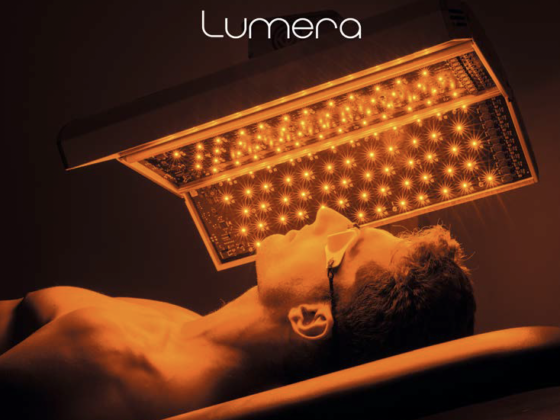
An LED session is simple, painless and generally lasts only 10 to 20 minutes. The patient is positioned comfortably, with the eyes protected, and the lamp is placed at a precise distance. The sensation is one of gentle, slightly warming light, but never burning. The first improvements often appear after 3 to 4 sessions: a more even complexion, more supple skin, and a reduction in redness or imperfections. For skin aging, the results are more gradual; they develop over the weeks, because cellular stimulation is a natural process that takes time.
SAFETY AND LIMITATIONS
LEDs are generally very well tolerated, making them an interesting treatment for sensitive or reactive skin. They are suitable for all phototypes and require no social downtime. However, it is important to remain realistic: LEDs will replace neither good skin hygiene, nor sun protection, nor conventional medical treatments. They do not fill deep wrinkles and do not replace injections or lasers when these are necessary. Results also vary according to age, lifestyle, cumulative sun exposure and each individual’s own regenerative capacity. It is a complementary tool, not a universal solution.
FAQ – THE MOST FREQUENTLY ASKED QUESTIONS ABOUT LEDS IN ANTI-AGING MEDICINE
1. How often should LED sessions be performed? In general, I recommend 1 to 2 sessions per week initially, followed by maintenance every 2 to 4 weeks according to need. The treatment works cumulatively: regularity is the key to achieving visible results.
2. Do LEDs hurt? No. LEDs are completely painless. Some people experience slight warmth or a feeling of relaxation, but never burning or tingling.
3. Can LED treatments be performed in summer? Yes, LEDs do not make the skin more sensitive to the sun. However, daily photoprotection should be continued, as with all anti-aging treatments.
4. Do LEDs replace injections or lasers?
No. LEDs are a complement, not a substitute. They stimulate the skin gently, but do not fill deep wrinkles or tighten tissues as more invasive techniques can.
5. How long does it take to see the first results? For most patients, greater radiance and more supple skin appear after 3 to 4 sessions. Effects on firmness or superficial wrinkles take several weeks, as they rely on natural biological mechanisms.
WHEN LIGHT ENGAGES WITH THE SKIN: SCIENCE TO BOOST
6. Are LEDs suitable for all skin types? Yes. LEDs are suitable for all phototypes, including sensitive, thin or reactive skin. The settings are adjusted according to the need: acne, redness, lack of radiance, aging prevention…
7. Are there any contraindications? They are rare. LEDs are simply avoided in cases of:
• photosensitisation caused by certain medicines,
• undiagnosed skin lesions, certain neurological conditions
• or pregnancy for certain wavelengths, as a precaution. A preliminary assessment makes it possible to evaluate each situation.
8. Can LEDs be combined with other treatments? Absolutely. LEDs are often optimised when combined with light peels, mesotherapy, topical treatments or medical anti-aging routines. They improve recovery and enhance results.
9. Are at-home LEDs as effective as medical devices? At-home devices can provide a slight boost in radiance, but their power is much lower than that of professional devices. For a genuine and lasting anti-aging effect, the results are not comparable.
10. Are the results long-lasting? Yes, but they require regular maintenance. LED acts on a biological process; if stimulation stops completely, the skin gradually returns to its natural rhythm.
MYTHS & FACTS ABOUT LEDS IN ANTI-AGING
Myth no. 1: LEDs rejuvenate the skin like a facelift. Fact: LEDs improve skin quality, radiance and texture, but do not replace a facelift or a skin-tightening treatment. They optimise skin biology without altering the deep structure of the face.
Myth no. 2: A single session is enough to see a real change. Fact: LEDs work cumulatively. One session can provide a boost in radiance, but lasting anti-aging effects require several closely spaced sessions, followed by regular maintenance.
Myth no. 3: LED is just a relaxing light. Fact: Although the session is indeed relaxing, LED is more than simply a “wellness treatment”. Certain wavelengths have proven effects on mitochondria, cellular energy production and collagen synthesis.
Myth no. 4: All LEDs are the same, regardless of the device. Fact: Power, wavelength precision and light-flow stability vary enormously. Medical devices deliver controlled energy that cannot be achieved with the majority of home-use devices.
Myth no. 5: LEDs replace skincare products. Fact: LEDs enhance the effectiveness of a routine, but replace neither well-formulated cosmetics nor sun protection. They act on cellular activity, not on hydration or the skin barrier.
LED photobiomodulation is a valuable tool in the modern anti-aging arsenal. Gentle, progressive and safe, it stimulates the skin’s natural mechanisms and optimises its vitality. In my practice, patients appreciate this treatment for its sensory qualities, comfort and non-invasive nature. With regular use and, sometimes, a combined protocol, the result is more radiant, more even skin that is, overall, better supported as it ages.
Dr Khamzat Bekov
Specialist in General Medicine Graduate in Anti-aging Medicine and Aesthetic Medicine in Paris.Private practice in Paris 16th arrondissement. Former Clinical Attaché in Internal Medicine at Saint- Antoine. University Hospital, Paris XII.Former Clinical Attaché at the Hospitals of Paris.